
Port Saint Lucie does not have a mold season so much as a mold climate. The city sits in one of the more humid stretches of the Treasure Coast, the cooling system runs close to twelve months a year, and the same moisture that makes the air feel heavy is what lets microbial growth take hold inside ductwork and air handlers. Homeowners here search for air duct mold cleanup services in Port Saint Lucie FL more than almost anything else we see in the local data - and for good reason.
The problem is that most of the advice online is either alarmist or vague. This guide is neither. It covers how to tell whether you actually have mold in your ducts, what genuine air duct mold remediation services in Port Saint Lucie FL involve, what does not work, and how to decide whether you need a professional or just a thorough cleaning. If you have already noticed a smell, our guide to musty smells from air vents is the right starting point for the symptom itself.
Why Port Saint Lucie Ductwork Grows Mold
Mold needs three things: moisture, organic material and darkness. Ductwork here supplies all three, which is why the problem is more common than people expect.
- Humidity never really drops. Treasure Coast humidity stays high through most of the year. The AC removes moisture from the air it cools, and that moisture ends up on the coil, in the drain pan and on nearby duct surfaces.
- Dust is the food source. The inside of a supply duct is coated in a thin film of house dust. Combined with moisture and the dark interior of a duct, that is exactly the environment mold prefers.
- The cooling season is nearly year-round. Almost twelve months of runtime means almost twelve months of condensation cycles and almost twelve months of dust moving across the same surfaces.
- Storm season pushes moisture deeper. Between the summer rains and any tropical system that lingers over the Treasure Coast, the city gets repeated soaking periods that push humidity into houses and their ductwork.
- Older housing and original ductwork. A large share of Port Saint Lucie homes have ductwork with a worn liner. A frayed or degraded liner holds moisture and debris far longer than a smooth, intact surface would.
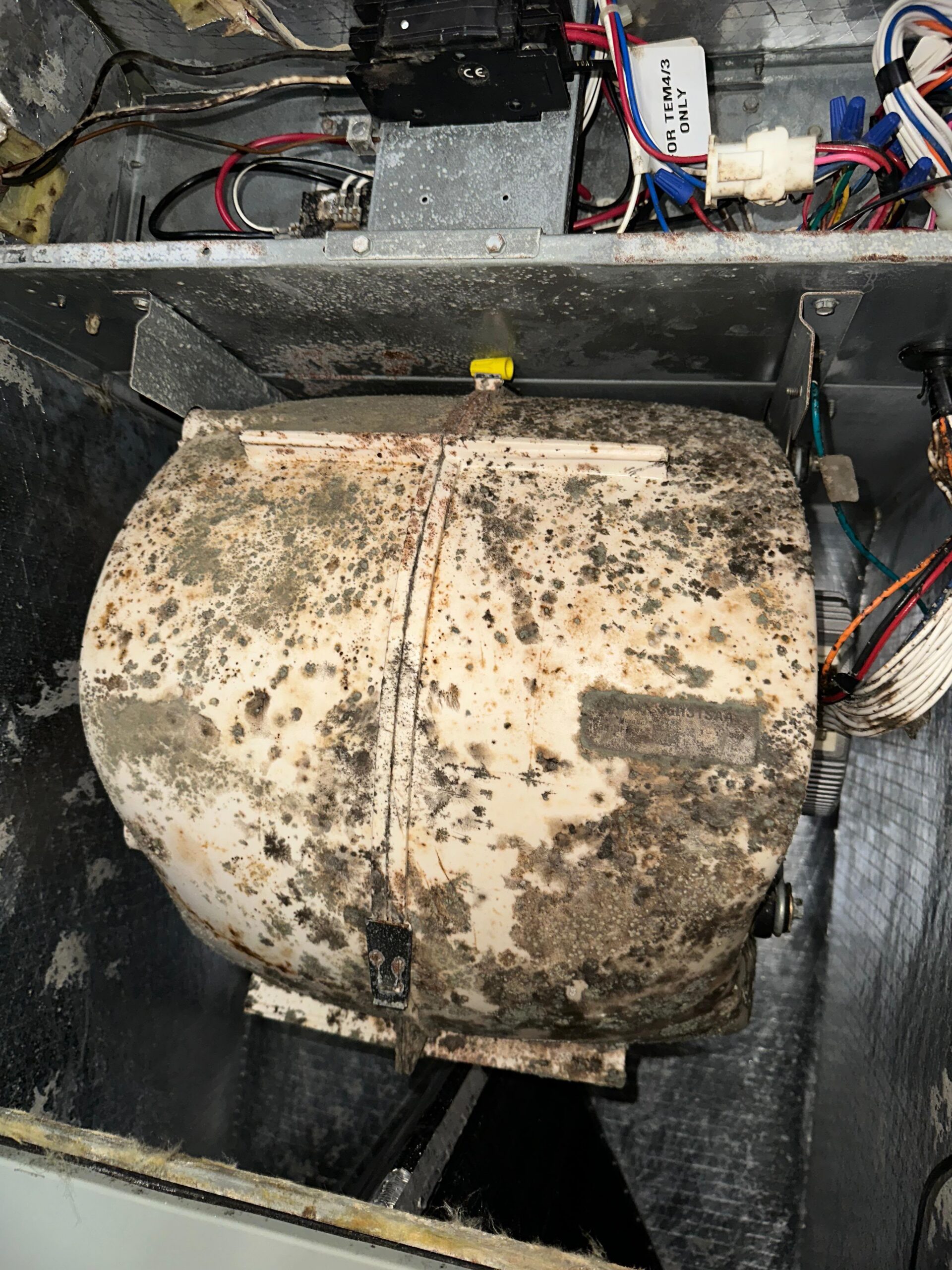
- A damp air handler is often the real source. In many homes the growth is concentrated on the coil, the drain pan or the blower housing rather than spread through every duct. That distinction matters, because it changes what the fix has to be.
In other words, the question is rarely whether conditions favor mold in a Port Saint Lucie home. It is whether those conditions have produced enough growth to affect the air you breathe.
How to Tell If Mold Is Actually in Your Ducts
A musty smell does not automatically mean mold in the ductwork, and not every dark patch is mold. Here is how to narrow it down.
- A musty, earthy smell when the AC starts. This is the most common sign, and it is the one that most often turns out to be real. If the smell fades a few minutes after startup, that is the classic duct or air handler signature.
- The smell is worst in the first cycle of the day. Overnight, stagnant damp air collects in the ducts. If the first run of the morning is the worst, that points upstream.
- Visible spotting around registers or on the coil. Pull a supply register cover and look. Speckling on the duct interior, or on the evaporator coil behind the access panel, is worth taking seriously.
- Water staining or a damp drain pan. Standing water or mineral staining in the pan is a growth site even if the ducts themselves look clean.
- Allergy-like symptoms that are worse indoors. Sneezing, congestion or irritated eyes that improve when you leave the house are commonly reported.
- A history of moisture problems. If the home has had a leak, a flooded AC closet or a condensate line that clogged, the odds go up considerably.
What you should not rely on is a visual glance at a register grille alone. Most growth sits on surfaces you cannot see without pulling panels or inspecting the duct interior - which is why an inspection is usually the honest answer.
What Real Mold Cleanup Involves
This is where a lot of homeowners get misled, so it is worth being precise about the process.
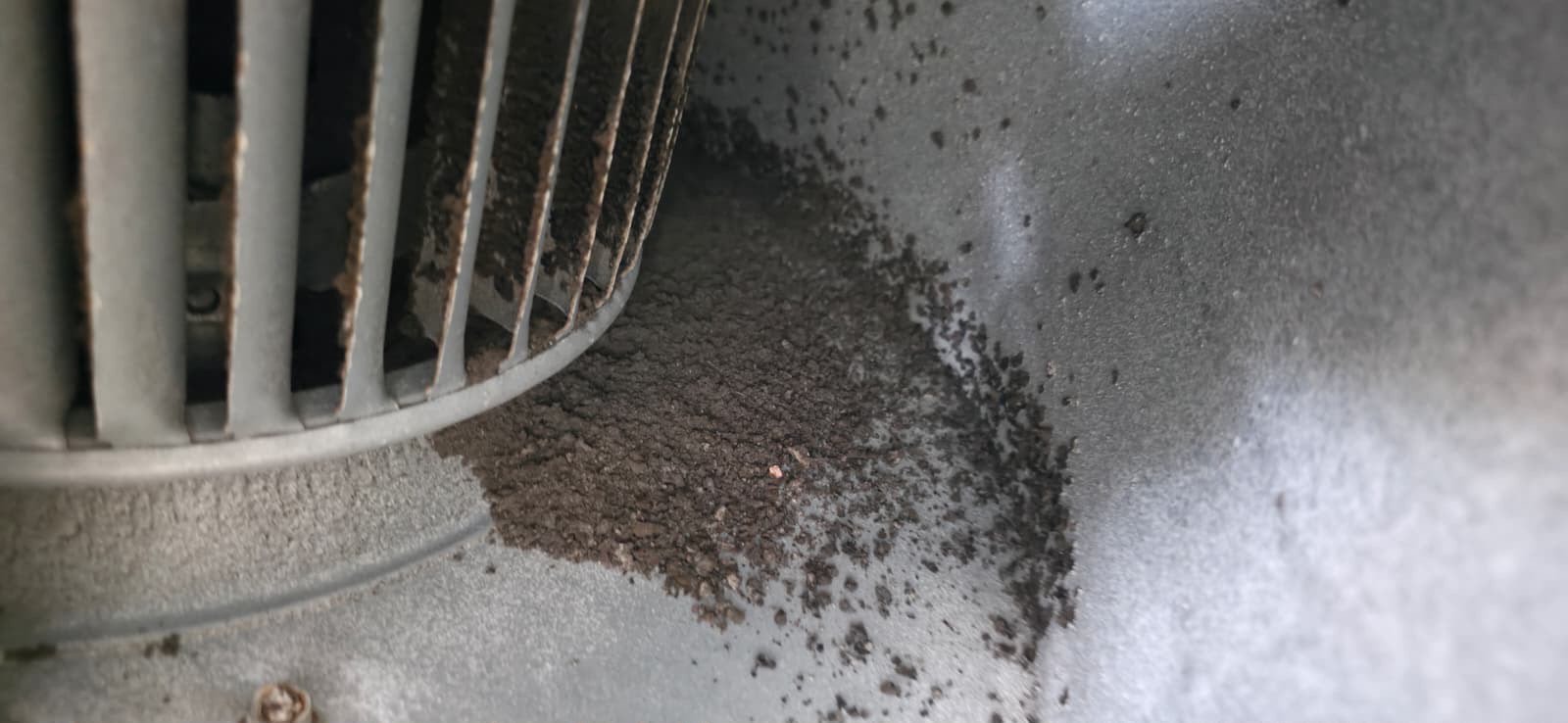
- Source removal first, always. The growth has to be physically removed from the surfaces it is on. That means cleaning the duct interiors, the coil, the drain pan and the blower housing under negative pressure so loosened material is captured rather than blown through the house.
- Fixing the moisture problem that caused it. This is the step that actually decides whether the problem comes back. If a coil is staying wet, a drain pan is not draining, or a condensate line is clogged, cleaning alone buys you a season at most. No treatment survives an ongoing water source.
- Sanitizing the surfaces afterward. Once the growth and debris are gone, treating the duct surfaces helps control regrowth. Our guide to air duct sanitizing for Port Saint Lucie humidity explains how that step fits in, and the comparison of cleaning versus sanitizing covers which service you actually need.
- Replacing compromised flexible duct where needed. If a section of flex duct is saturated or heavily contaminated, cleaning it is not a real fix - replacement is. A provider should tell you plainly when that is the case instead of charging for a clean that will not hold.
- Documentation. Before-and-after photos of your own system, so you can see what was there and verify what was removed.
What Does Not Work
Being clear about the ineffective options saves money and frustration.
- Fogging or spraying without cleaning. Applying a product over a layer of dust and growth does not reach the surface. This is the single most common shortcut, and it is the one to refuse.
- Ozone generators as a cure. They may knock down odors temporarily, but they do not remove growth from duct surfaces, and the underlying moisture source remains.
- Regular household cleaning of visible grilles only. Wiping a register cover is a good habit, but the growth is usually well upstream of it.
- A cleaning with no moisture fix. Without addressing the coil, drain pan or condensate line, the problem returns. This is why we ask about moisture history before quoting work.
When to Call a Professional
A professional inspection makes sense when any of the following is true.
- The musty smell tracks the AC cycle rather than coming from a specific spill or damp towel.
- You can see spotting on the coil or inside a duct after pulling a register.
- The home has had a leak, flood or clogged condensate line.
- Anyone in the household has allergies or asthma and symptoms are worse indoors.
- The ductwork has never been serviced and the home is more than a decade old.
If none of those apply and the smell is mild, start with the cheaper diagnosis: check the drain pan and condensate line, confirm the filter is clean, and rule out a damp towel or slow drain. Our Port Saint Lucie air duct cleaning guide covers the general service, and the FAQ page explains how often ductwork should be cleaned in this climate.
What Drives the Cost
The price of mold-related duct work in Port Saint Lucie is set by what is actually contaminated, not by a flat rate. The factors that matter:
- Where the growth is. A damp coil and drain pan is a different job than growth spread through long duct runs.
- How much of the system is affected. One run versus the whole house changes the scope considerably.
- Whether duct sections need replacement. Saturated flexible duct is replaced, not cleaned, and that is a material cost.
- Access. Attic and chase runs that are hard to reach take longer than exposed, straightforward layouts.
- The moisture fix. If a coil, pan or line needs correction, that is part of the real solution and should be quoted honestly rather than skipped.
Ask for a written, itemized quote based on an actual inspection of your system, confirm whether sanitizing is included, and ask directly whether any duct sections should be replaced rather than cleaned. Our guide to air duct cleaning costs in Port Saint Lucie explains how local providers build their numbers, and it is worth reading before you compare quotes.
Why Sunshine Duct Cleaning
We are an insured, professional crew that cleans and sanitizes air ducts, dryer vents and chimneys across Saint Lucie County. Every technician is background-checked and trained, we inspect before we quote, and we photograph your system before and after so you can see what was found and what was removed. We will also tell you plainly when a cleaning is not the right answer. You can see every community we serve on our Saint Lucie County service areas page, including the Port Saint Lucie service area, or follow our work on Facebook.
Frequently Asked Questions
1. How do I know if I have mold in my air ducts in Port Saint Lucie?
The most reliable sign is a musty, earthy smell that appears when the AC starts and is worst on the first cycle of the day. Visible spotting on the evaporator coil, damp staining in the drain pan, or a history of leaks or clogged condensate lines all raise the odds. A visual look at a register grille alone is not enough, because most growth sits out of sight.
2. Does air duct cleaning remove mold?
Cleaning removes the growth and the organic material it feeds on, which is the essential first step. It does not fix the moisture problem that caused it. If a coil, drain pan or condensate line is left wet, the growth returns regardless of how well the cleaning was done.
3. What are air duct mold remediation services, and how are they different from cleaning?
A remediation approach combines source removal, correction of the moisture problem, and sanitizing of the surfaces afterward. Cleaning alone addresses the material; remediation addresses the cause. That is why a provider who foggs a product over dirty ductwork without cleaning is not doing remediation at all.
4. Will a mold problem come back after cleaning?
Only if the moisture source is still active. This is the single most important point. Removing the growth without fixing what keeps the system wet means the same conditions return, usually within a season in this climate.
5. Is mold in ductwork a health risk?
Mold growth in a duct system means spores and microbial debris are being distributed through the air your household breathes. People with allergies or asthma often notice it first, typically as symptoms that are worse indoors and ease when they leave the house. If anyone in the home has respiratory conditions, it is worth having the system inspected rather than waiting.
6. Should I replace the ductwork or have it cleaned?
It depends on the material. Rigid metal and intact lined duct can usually be cleaned effectively. Saturated or heavily contaminated flexible duct is often better replaced, because cleaning a damaged liner does not restore it. A provider should tell you honestly which situation you are in rather than quoting a clean for duct that needs replacing.
Call Sunshine Duct Cleaning at (772) 212-0985 to schedule an air duct mold inspection anywhere in Port Saint Lucie and across Saint Lucie County. Our hours are Open Sunday-Friday 24 hours, Closed Saturdays, and we are glad to inspect your system and give you an honest answer before you commit to anything.