
Miami Beach is a narrow barrier island, and almost every building on it is within walking distance of salt water. That single fact shapes everything about how air conditioning works here. From the pre-war apartment blocks of South Beach to the towers along Collins Avenue and the quieter residential blocks of North Beach, ductwork is running close to the ocean, inside shared walls, and in buildings that were designed long before anyone worried about indoor air quality.
If you own or rent a unit here, you have probably noticed a musty smell when the AC first kicks on, dust that reappears on the same shelf every week, or allergy symptoms that ease up the moment you leave the building. This guide covers what salt air and constant coastal humidity actually do to Miami Beach ductwork, the warning signs that it needs cleaning, what a professional job involves in a condo or high-rise, what it costs, and how often island homes should be on a schedule.
Why Miami Beach Ductwork Is Its Own Category
Most duct cleaning advice is written for single-family homes on inland lots. Miami Beach is not that, and the differences are concrete.
- Everything is near the ocean. On a barrier island, salt is not an occasional nuisance - it is in the air at every address. Airborne salt corrodes vent caps, registers, screws and the blower housing, and it makes dust cling to duct surfaces instead of passing through.
- The air conditioning basically never stops. An air handler in Miami Beach runs close to ten months a year. Every one of those hours moves air through the system, and every hour deposits whatever the filter misses onto the inside of the duct. More runtime means faster buildup than mainland homes ever see.
- Humidity is the real driver. Miami Beach sits in high humidity for most of the year. Damp dust adheres to the duct liner and forms the film that produces the musty smell people here report more than any other symptom. That film does not dry out and does not blow away on its own.
- Ductwork is often short, shared and hidden. In condos and high-rises, runs are frequently inside wall cavities and ceiling chases, sometimes passing through spaces shared with neighboring units. That makes access and containment more involved than a simple attic run, and it means the work has to be done cleanly.
- Storm season resets the clock. Every named storm leaves a month of grit, roof debris and moisture that finds its way into the system - especially in buildings where power was out and the air handler pulled unconditioned, humid air on restart.
The result is that a Miami Beach unit often needs attention sooner than the standard three-to-five-year guidance suggests, even though the square footage is smaller.
What a Condo or High-Rise Visit Actually Looks Like
Condo duct cleaning is not a smaller version of a house job - it is a different job, with different logistics.
- Access coordination. Parking, freight elevator reservations and building quiet hours usually need to be arranged in advance. A crew that does not ask about any of this has not worked many buildings on the island.
- Negative-pressure containment, always. The system is put under vacuum so loosened debris leaves the unit instead of settling into your living room. In a condo this matters more, not less - you do not want dust pushed into a neighbor space or a shared chase.
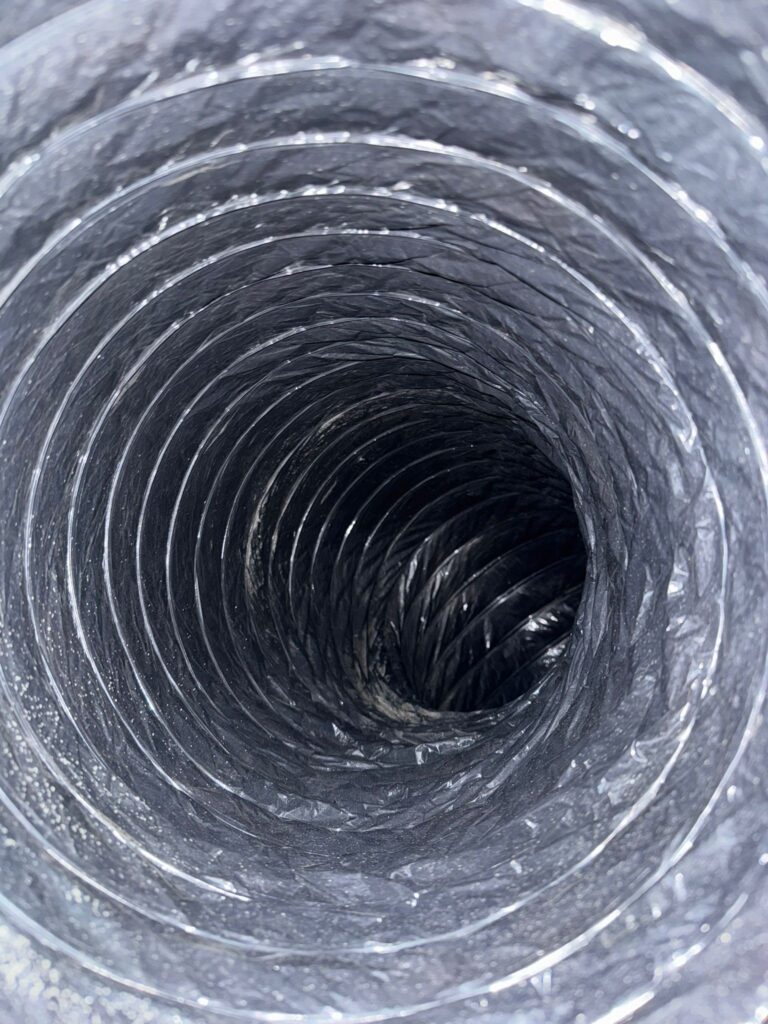
- Agitation of every run. Rotating brushes and compressed air break the caked film off supply runs, returns and trunk lines. Damp dust that has been sitting in a humid duct for years will not move on vacuum alone.
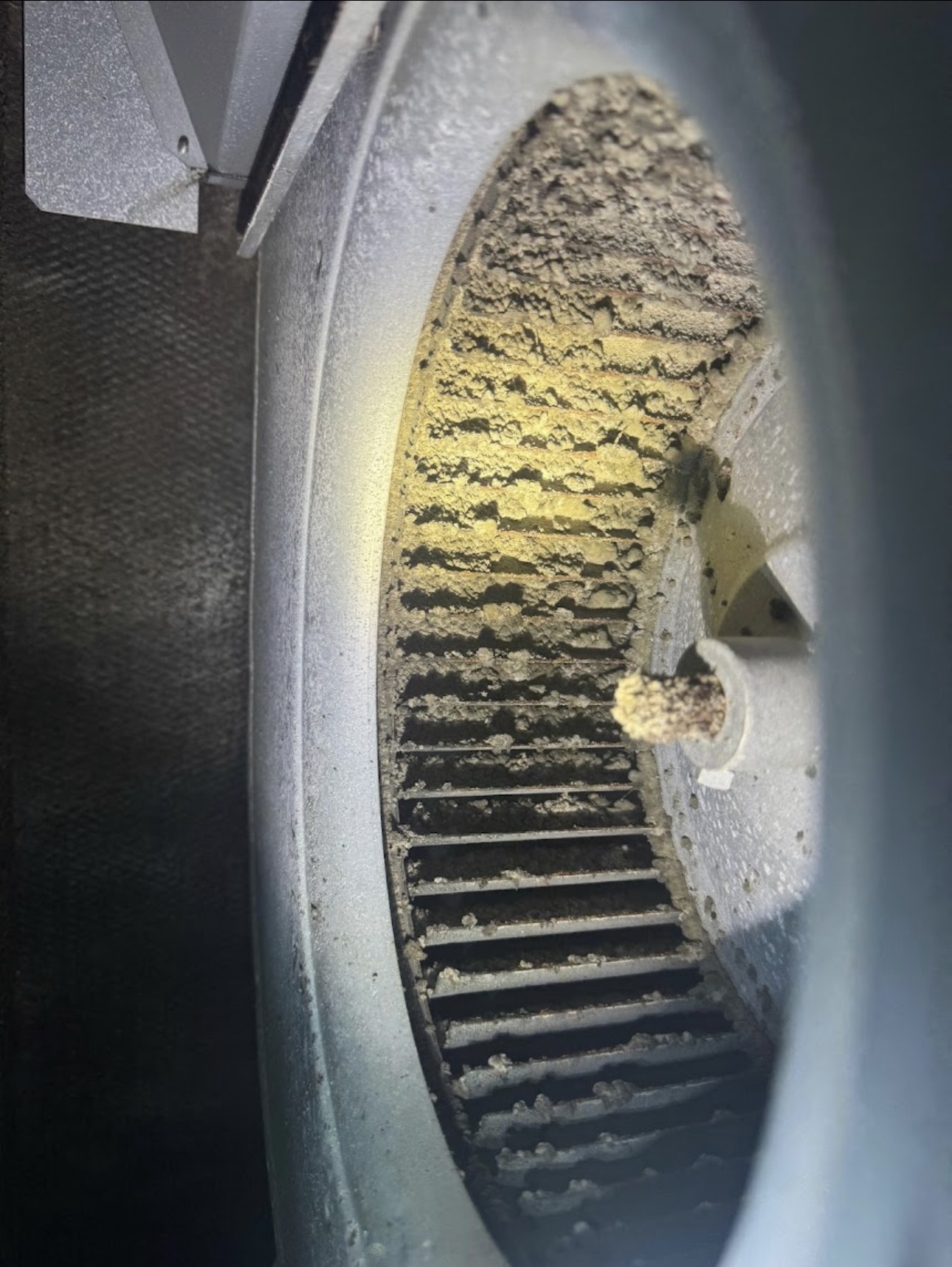
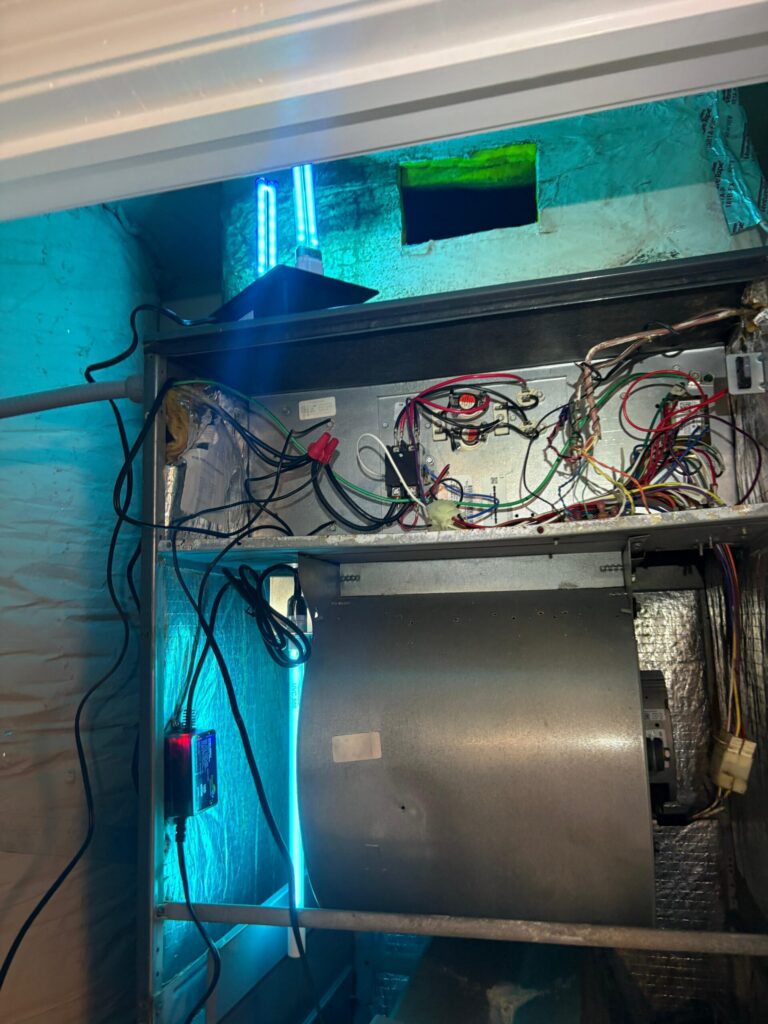
- Air handler and blower wheel cleaning. This is the most commonly skipped step and the one that matters most here. In a condo the air handler usually sits in a closet and pulls return air from inside the unit itself, so a dust-packed blower wheel is recirculating your own household dust and salt grit. A coated wheel also moves less air, which drives up runtime and energy use.
- Registers and grilles removed and washed. Supply and return covers come off, get cleaned, and go back on.
- Photos of your own system before and after. In a condo, where you cannot easily see the ductwork, this is the only real way to know the work happened.
If you are seeing streaks at the registers or a smell at startup, our guide to the signs a home needs air duct cleaning covers the full checklist, and the indicators are the same whether the system is in a house or a tower.
How Often Should Miami Beach Units Be Cleaned
Every three to five years is the general baseline for Florida homes. On the island, two to three years is the better interval for most units, and it is worth moving that up further if:
- The building is older and the ductwork has never been cleaned since it was installed.
- The unit has pets, or the occupants include anyone with allergies or asthma.
- The apartment has been through a renovation, which fills supply lines with fine drywall dust.
- The building took on water or ran without power through a storm.
Condo square footage being small does not shorten the interval - that is about runtime and humidity, not size. If you want the reasoning laid out in full, read how often to clean air ducts in Florida.
Dryer Vents Are a Genuine Priority Here
In a high-rise, dryer vents often run long horizontal or vertical distances - sometimes up through a shared shaft - to reach an exterior or roof termination. That is exactly the configuration where lint accumulates out of sight, and lint buildup is a leading cause of house fires. If a single load takes two or three cycles to dry, or the laundry closet runs noticeably hot, the vent needs attention.
It is the rare service where the risk is that concrete, and it is worth doing on the same visit as the ducts. Our dryer vent fire safety guide for Tampa homes explains the mechanism, and it applies identically to a Miami Beach laundry closet.
What It Costs in Miami Beach
Pricing is driven by the size of the system, the number of vents, the length and layout of the runs, and how much coordination the building requires - not by the zip code or the view. A single air-handler closet with short runs is a smaller job than a multi-story home on the water with long duct runs, and the quote should reflect that.
Be wary of a very low advertised flat rate. It usually covers a surface pass with light equipment, and the real number appears once the crew is in the unit. Ask for a written, itemized quote based on your actual system, confirm that the air handler and blower wheel are included, and ask whether photos are provided. Our guide to what air duct cleaning costs explains how providers build those figures, and the same logic applies on the island.
Why Sunshine Duct Cleaning
We are an insured, professional crew that cleans air ducts, dryer vents and chimneys across South Florida. Every technician is background-checked and trained, we work with property managers and associations on high-rise logistics, and we photograph your system before and after so you can see exactly what was done. You can see every community we serve on our Miami-Dade County service areas page, including the Miami Beach service area, or follow our work on Facebook.
Frequently Asked Questions
1. How often should air ducts be cleaned in a Miami Beach condo?
Every two to three years is a reasonable interval for most island units. The air conditioning runs close to ten months a year and the humidity never really lets up, so buildup happens faster than the three-to-five-year baseline used for inland homes. Units with pets or allergy sufferers should stay at the shorter end.
2. Does salt air really get into condo ductwork?
Yes. On a barrier island salt is airborne at every address, and it travels indoors on its own. It corrodes metal components such as vent caps, registers and the blower housing, and it makes dust cling to duct surfaces so buildup accelerates compared with an inland building.
3. How is condo duct cleaning different from a house?
The main differences are access and containment. Runs are usually shorter but they sit inside wall cavities and ceiling chases, so parking, elevator reservations and building quiet hours need arranging, and negative-pressure containment matters more because you do not want debris pushed into a neighbor space.
4. What are the warning signs my unit needs duct cleaning?
The most common ones are a musty or damp smell when the AC starts, dust returning within a day or two of wiping, dark streaks around supply registers, allergy symptoms that are worse indoors, and higher energy bills for the same comfort.
5. Do you service high-rise buildings and managed properties?
Yes. We work with property managers and associations on high-rise logistics, including correct parking, elevator reservations and quiet-hours windows, and we carry the insurance buildings ask for. Appointments are scheduled so they are not a burden on you or your tenants.
6. Should I have the dryer vent cleaned at the same time?
Yes, and in a high-rise it is one of the highest-value services. Dryer vents commonly run long distances through shared shafts to a roof or exterior termination, which is exactly where lint accumulates out of sight. Lint buildup is a leading cause of house fires, so clearing it during the same visit is efficient and worthwhile.
Call Sunshine Duct Cleaning at (772) 210-3388 to schedule air duct cleaning anywhere in Miami Beach and across Miami-Dade County. Our hours are Open Sunday-Friday 24 hours, Closed Saturdays, and we are happy to give you an honest assessment before you commit to anything.