
Sunny Isles Beach is one of the densest stretches of coastline in Florida. In a few blocks between the Intracoastal and the Atlantic, the city packs a wall of high-rise towers holding thousands of units, most of them with in-unit laundry or a shared laundry room on each floor. It is a remarkable amount of living compressed into a very small footprint, and it is also one of the hardest environments in the state for a dryer vent system.
That last part is not obvious to most residents. A house has one dryer and one vent run, short and visible. A tower can have hundreds of dryers feeding into shared riser ducts that travel many floors before they ever reach open air. When lint accumulates in that kind of system, it accumulates out of sight, and the consequences affect far more than one unit. This guide covers why high-rise dryer vents behave differently, the warning signs worth acting on, what professional cleaning involves in a building, what drives the cost, and how to keep a system that size out of trouble.
Why High-Rise Dryer Vents Are Different
A tower laundry system is not just a house system repeated a hundred times. The structure of it changes the problem.
- Vent runs are long and vertical. In a house the vent exits a wall within a few feet. In a tower, exhaust often travels up a shared riser across many floors before reaching a rooftop or side termination. Every added foot is another place for lint to settle, and gravity works against a vertical run.
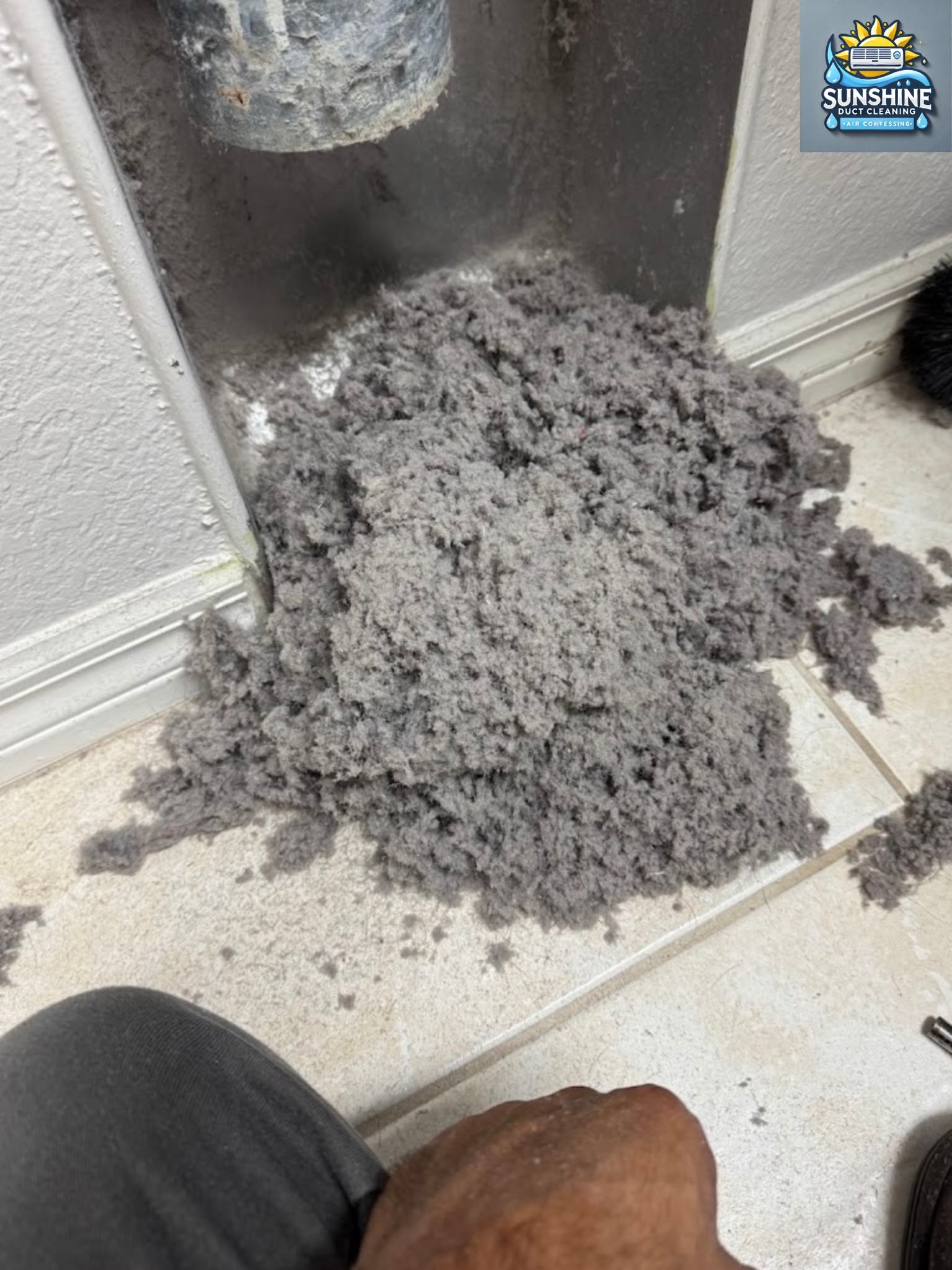
- Hundreds of dryers feed the same system. Each one produces lint on every cycle. Multiplied across a building, that is a continuous supply of flammable material, and a shared riser concentrates it in one place.
- Lint is a fire risk wherever it collects. Lint is extremely flammable, and dryer vents are one of the leading causes of house fires in the country. A blocked shared riser does not just affect the unit that noticed the problem - it puts everyone served by that duct at risk.
- Humidity is relentless. Miami-Dade runs the air conditioning nearly all year, and the air itself stays humid. Damp lint is heavier and stickier than dry lint, so it clings to the walls of the run instead of being carried out.
- Salt air corrodes terminations. Sitting between the Intracoastal and the ocean, Sunny Isles Beach gets salt on the exterior termination year-round. A rusted or seized flap restricts airflow even when the run behind it is clear.
- In-unit laundry closets hide the problem. Where a unit has its own dryer, the machine is usually tucked into a closet or a kitchen nook. The transition duct behind it is where a surprising amount of lint collects, and nobody ever sees it.
Put those together and a tower vent system can reach a genuinely risky level of buildup while every individual resident assumes someone else is handling it.
The Warning Signs Worth Acting On
Some of these show up in one unit. Others only appear when several residents compare notes, which is often how a building-wide problem gets noticed.
- Clothes take two cycles to dry. This is the most common early sign. If a load that used to dry in one pass now needs two, airflow through the vent is restricted.
- The dryer or the laundry area gets unusually hot. Heat has nowhere to go if the exhaust is blocked, and that heat is what ignites lint.
- A burning or scorched smell during a cycle. That is not a normal dryer smell. Stop using the machine and report it to building management.
- The exterior vent flap does not open when the dryers run, or you feel little airflow at the termination.
- Lint visible around the outside vent cap, or lint collecting behind and under the dryer in your unit.
- The laundry area feels damp or humid after a cycle, which means moist air is staying inside rather than venting out.
- Several units reporting the same slow drying. When multiple residents on the same stack describe the same symptom, the shared riser is the likely culprit rather than any single machine.
If more than one of those applies, the vent should be inspected before the dryers are used again. Our dryer vent fire safety guide explains exactly how a clogged run turns into a fire.
What Professional Cleaning Involves in a Tower
Building-scale work is judged on whether residents keep their routine. That shapes the entire process.
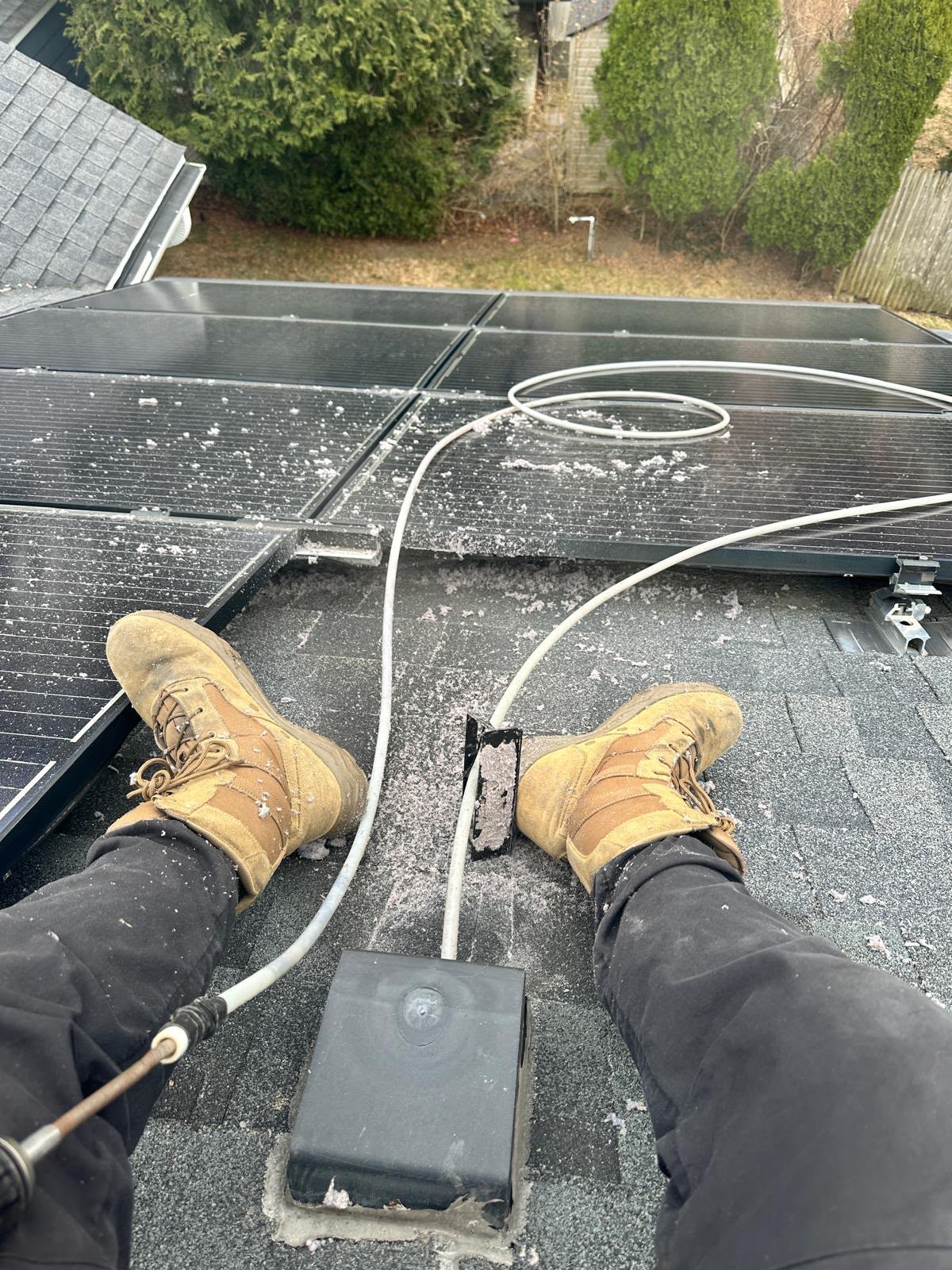
- The full run is cleared from each dryer to the exterior termination. In a shared system, that means addressing the riser, the branch connections from each floor, and the rooftop or side termination, not just the transition duct behind one machine.
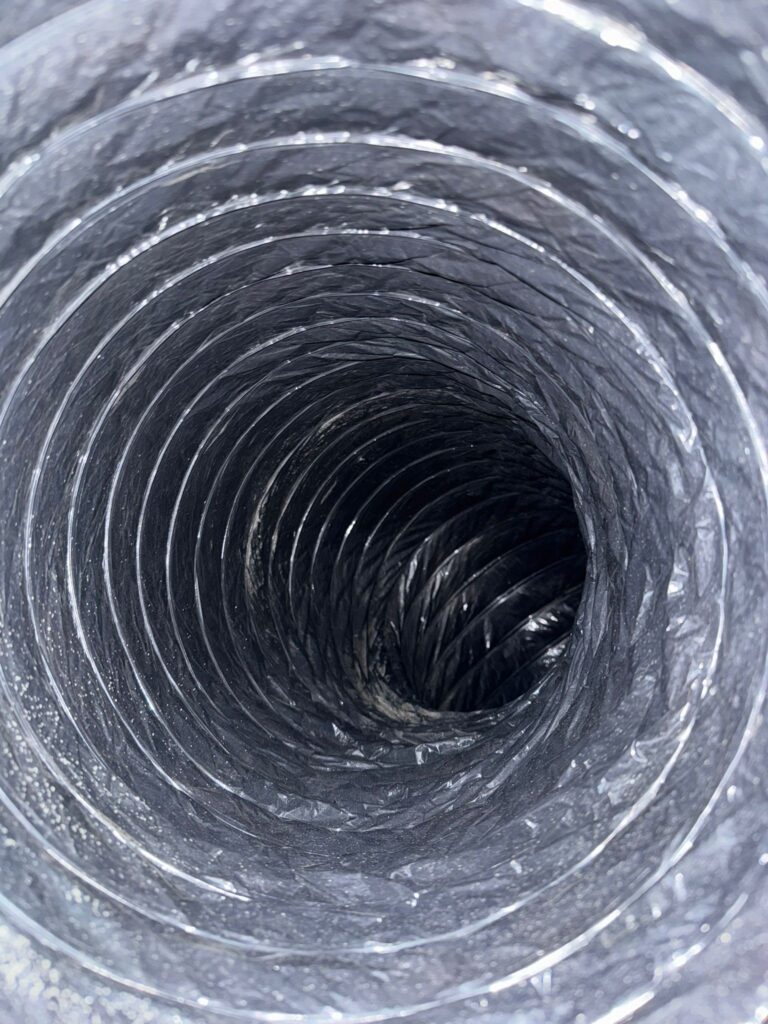
- Rotary brushes and air whips matched to the duct material. Flexible corrugated ducting needs gentler tools than rigid metal pipe. A crew using one method for everything can tear a soft liner and make the problem worse.
- Containment and negative pressure. Loosened debris is captured and removed rather than distributed into units or common areas. In an occupied building this is not optional.
- The exterior termination is cleared and checked. Rooftop caps and side-wall flaps are common blockage points, and in this city the flap itself may be seized by salt corrosion.
- Work scheduled around residents. This is usually planned with building management, often during the day when many units are empty, and with access coordinated floor by floor.
- Before-and-after photos and a report. For a shared system, documentation is what lets management show the board, the insurer or the residents that the work was actually done.
If your individual unit's air ducts have not been looked at either, our Aventura condo guide covers what high-rise duct cleaning involves, and the FAQ page covers how often ductwork should be cleaned in this climate.
How Often Should a Building Be Cleaned
Once a year is the right baseline for most households, and a multi-unit building with heavy use should be on at least that interval - arguably shorter. The interval should be tighter when any of these apply:
- The building has many units with in-unit laundry, so the shared riser carries a constant lint load.
- The vertical run is long, or the termination is on the roof.
- Ducting is the flexible corrugated kind rather than smooth metal pipe.
- The termination is exposed to salt air and shows corrosion.
- Residents are reporting slower drying or longer cycle times.
For a large building, a documented annual service is the practical minimum, and a mid-year check of the termination and airflow is a sensible addition. If you are not sure where your building stands, a cleaning visit will show how much came out and how fast it built up, which makes the right interval obvious.
What Drives the Cost
The biggest variables in a tower are the ones a single-unit price never accounts for. Pricing depends on the length and configuration of the vent run, how many dryers connect to it, how accessible the riser and termination are, and how much buildup is present. A short run from one unit to a side wall is a straightforward job. A multi-floor riser serving hundreds of units, with a rooftop termination, is a project - and a quote that reflects that is a quote you can trust.
For building management, the practical questions are worth asking upfront: confirm the full run from each dryer to the exterior is included rather than just the transition ducts, ask how containment is handled in occupied areas, confirm that the rooftop or side termination is part of the job, and ask whether you will receive photos and a written report. Our guide to how air duct cleaning is priced explains how providers build their figures, and the same logic applies at building scale.
Why Sunshine Duct Cleaning
We are an insured, professional crew that cleans dryer vents, air ducts and chimneys across Miami-Dade County, including high-rise buildings. Every technician is background-checked and trained, we match tools to the duct material rather than running one setup everywhere, and we photograph the run before and after so you can see what came out. You can see every community we serve on our Miami-Dade County service areas page, including the Sunny Isles Beach service area, or follow our work on Facebook.
Frequently Asked Questions
1. How often should dryer vents be cleaned in a Sunny Isles Beach building?
Once a year is the practical baseline for a multi-unit building with heavy laundry use, and a large building that shares a riser across many floors should not go longer. The interval should be shorter where the vertical run is long, the termination is exposed to salt, or residents are reporting slower drying.
2. My dryer takes two cycles to dry. Is that my machine or the building?
It can be either, but in a tower it is worth comparing notes with neighbors. If several units on the same stack report the same slow drying, the shared riser is the likely cause rather than any single dryer. That is a building-level issue, not a machine repair.
3. Can a shared laundry riser really be a fire risk?
Yes, and it is a serious one. Lint is highly flammable, and a shared riser concentrates lint from many dryers into one duct. A blockage there does not just affect one unit - it puts everyone served by that duct at risk, which is why a documented annual service matters.
4. Who arranges cleaning in a condo building?
Usually building management or the condo association, since the shared riser is common property. Individual owners can still have their own in-unit transition duct checked, and the two jobs often get coordinated in the same visit.
5. Does salt air affect a building's dryer vent?
It does. Sitting between the Intracoastal and the ocean, Sunny Isles Beach gets salt on exterior terminations year-round, and a rusted or seized flap restricts airflow on its own even when the run behind it is clear. It is worth checking the termination as part of any annual service.
6. Do you work in occupied buildings?
Yes. High-rise work is planned with building management, typically during the day when many units are empty, with access coordinated floor by floor and containment used so debris is not distributed into units or common areas.
Call Sunshine Duct Cleaning at (772) 210-3388 to schedule dryer vent cleaning anywhere in Sunny Isles Beach and across Miami-Dade County. Our hours are Open Sunday-Friday 24 hours, Closed Saturdays, and we are glad to give you an honest assessment before you commit to anything.