Palm Harbor sits in one of the more comfortable pockets of Pinellas County. The tree canopy is heavy, the neighborhoods are established, and many homes here back onto a golf course or a canal off the Intracoastal. It is a genuinely pleasant place to live, and it is also a place where air conditioning runs close to ten months a year in air that is rarely dry. That combination is exactly what produces the complaint we hear most from homeowners here: the house smells fine until the AC kicks on, and then there is a faint musty, sour note in the air.
That smell is not usually a mystery. It is what damp dust and microbial growth on the inside of ductwork smell like once they have had a whole summer to develop. It is also the point where cleaning alone often is not enough, and where sanitizing enters the picture. This guide covers why Palm Harbor ductwork gets musty, how to tell whether the smell is coming from the ducts or somewhere else, what sanitizing actually does that cleaning does not, and how to decide whether you need it.
Why Palm Harbor Ductwork Turns Musty
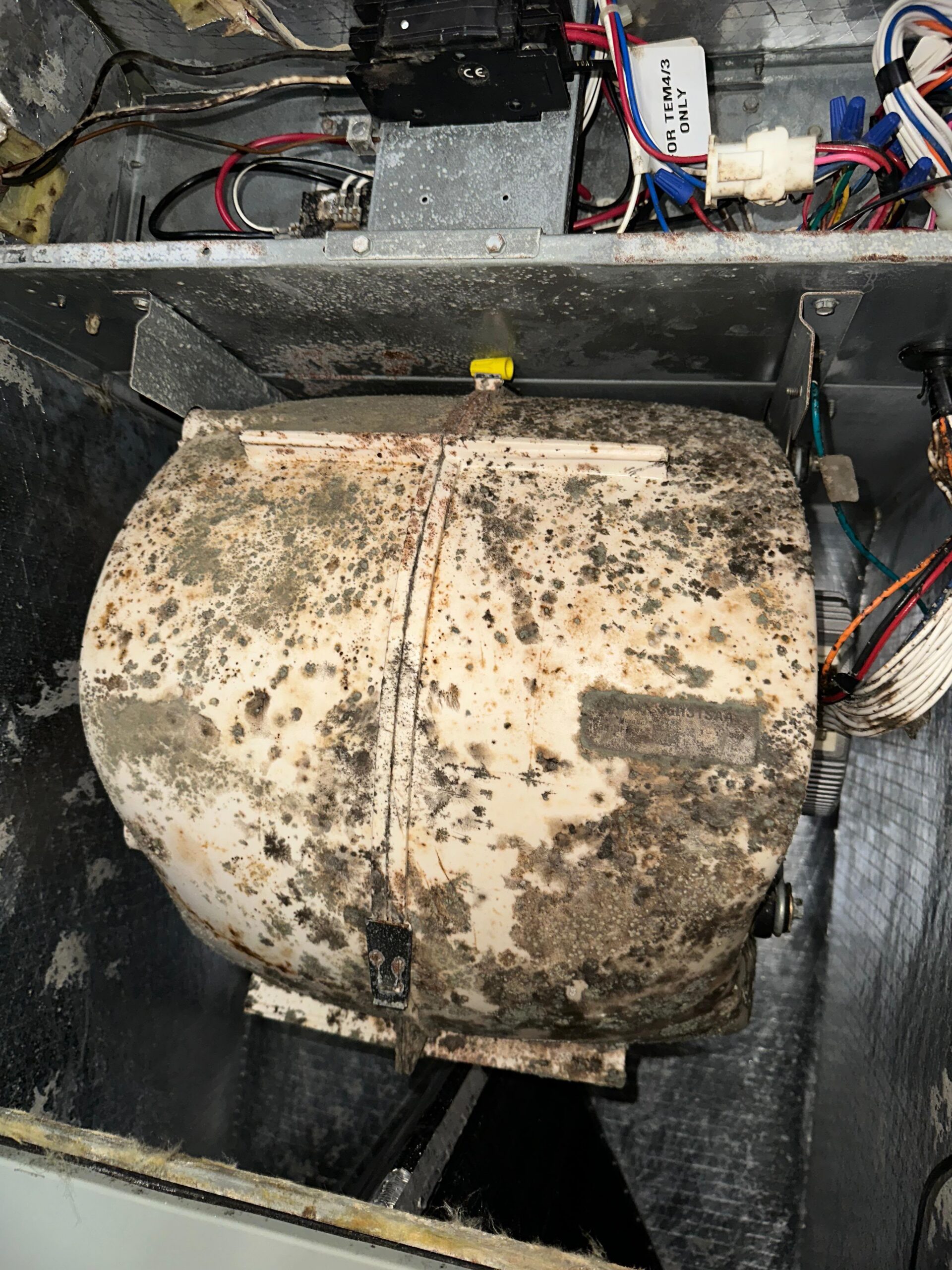
A musty duct does not mean the house is dirty. It means conditions inside the ductwork have favored growth, and in this climate those conditions are easy to hit.
- Humidity is high most of the year. From spring through fall the air stays heavy. The AC removes moisture from the air it cools, and that moisture ends up on the coil, in the drain pan and on nearby duct surfaces. Damp surfaces grow things.
- The cooling season is long. Ten months of runtime means ten months of condensation cycles and ten months of dust being drawn through the same ductwork.
- Dust plus moisture plus darkness is the recipe. The inside of a supply duct is dark, humid and coated in a thin film of house dust. That is precisely the environment mold and bacteria prefer.
- Coastal air carries more than dust. Being close to the Gulf and the Intracoastal, homes here pull in salt-laden, humid air. It makes dust stickier and surfaces stay damp longer.
- Older, established housing. A large share of Palm Harbor homes are decades old. Original ductwork with a worn liner holds moisture and debris that a newer, smooth duct would shed more easily.
- The blower wheel compounds it. A dust-coated blower wheel moves less air, which means longer runtimes, which means more condensation time. It is a self-reinforcing cycle.
If your home checks several of those boxes, a musty smell is not a warning sign so much as a predictable result.
Is the Smell Coming From the Ducts
Before booking anything, it is worth confirming the source. Not every musty smell in a house comes from ductwork.
- The smell appears when the AC starts and fades a few minutes later. This is the classic duct signature. The system pushes standing air out of the ducts at startup, and that air carries the smell into the room.
- One or two rooms smell worse than the rest. That points to a specific run rather than the whole system, which is useful information for whoever inspects it.
- The smell is worse after the system has been off. Overnight or after a vacation, stagnant damp air collects. If the first cycle of the day is the worst, the ducts are a strong suspect.
- It gets worse in the rainy season. Seasonal ramping points to moisture, not to a dead animal or a spill.
- Rule out the alternative sources first. A wet towel left in the washer, a slow drain, or a damp crawlspace can all smell similar. Check those before assuming the ducts.
If the smell tracks the AC cycle, the ducts or the air handler are where to look. Our guide to the signs a home needs air duct cleaning covers the broader warning list, and our Port Saint Lucie musty smell guide walks through the same diagnosis from the Treasure Coast side.
What Sanitizing Adds That Cleaning Does Not
This is the distinction most homeowners are missing, and it matters because the two services solve different problems.
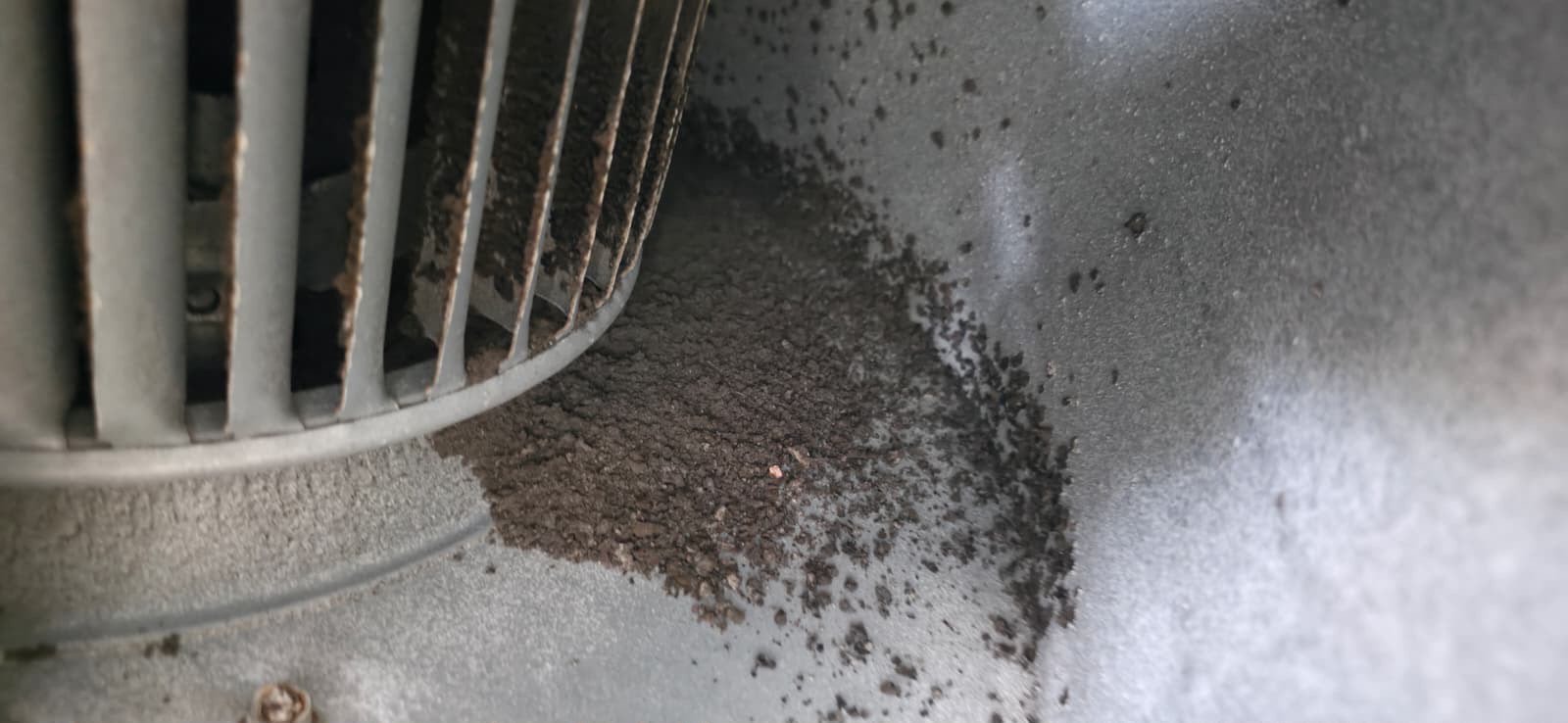
- Cleaning removes the material. Sanitizing treats the surface. A cleaning pulls out the loose dust, debris and the bulk of what has built up on the duct walls. What it does not do is address the microscopic growth left behind on the liner itself.
- Sanitizing is applied after cleaning, not instead of it. You cannot sanitize over a layer of dust and expect it to do anything useful. The order matters: source removal first, treatment second.
- It targets the smell, not just the appearance. The musty note people describe is microbial, not just dusty. Removing dust reduces it; treating the surface is what actually addresses the source of the odor.
- It helps control regrowth. A treated duct is a less hospitable surface for mold and bacteria going forward, which is the real value in a climate that stays humid.
- It is a maintenance layer, not a permanent fix. Sanitizing does not stop a moisture problem. If a duct is staying wet because of a coil or drainage issue, that has to be fixed or the growth returns.
For a home that just has ordinary dust, a cleaning is the right answer and sanitizing is optional. For a home that smells musty every time the AC starts, the smell is the evidence that the surface itself needs treating.
What a Proper Cleaning and Sanitizing Visit Involves
If you are going to have this done, it is worth knowing what good work looks like so you can tell it apart from a quick spray.
- Source removal under negative pressure first. The system is put under vacuum and every run is agitated so the loosened debris is captured and removed rather than blown around the house. No sanitizing happens before this step is finished.
- Air handler, coil and blower wheel addressed. This is where a large share of the smell actually lives. Sanitizing ducts while leaving a damp, dirty coil in place solves nothing.
- Drain pan and condensate line checked. Standing water in a pan is a growth site, and it will undo the work above it.
- An appropriate product applied to the duct surfaces. It should be applied so it actually reaches the duct walls rather than being fogged into the room.
- Registers and grilles removed and washed. Supply and return covers accumulate the same film as the ducts.
- Before-and-after photos. You should see what was there. Smell is subjective, but buildup is not.
If it has been years since the ductwork was touched, our guide on how often to clean air ducts in Florida{at=2026-11-12} covers how the interval is set in this climate, and the Pinellas County service area page lists every community we cover.
What Drives the Cost
Sanitizing is priced on top of a cleaning, and the cleaning is the larger part of the job. Pricing depends on the size of the system, the number of vents, the length and layout of the runs, and how accessible the ductwork is - not on the neighborhood. A compact Palm Harbor villa with a handful of short runs is a smaller job than a two-story house with long trunk lines.
Be cautious with a very low advertised price for a clean-and-sanitize package. It usually means a light surface pass with minimal agitation and a quick fogging, which will not reach the duct walls. Ask what is included, confirm that the air handler, coil, blower wheel and registers are part of the job, and ask for photos of your own system. Our guide to how air duct cleaning is priced explains how local providers build their figures.
Why Sunshine Duct Cleaning
We are an insured, professional crew that cleans and sanitizes air ducts, dryer vents and chimneys across Pinellas County and the Tampa Bay area. Every technician is background-checked and trained, we match equipment to the system rather than running one setup everywhere, and we photograph your system before and after so you can see the work that was done. You can see every community we serve on our Pinellas County service areas page, including the Palm Harbor service area, or follow our work on Facebook.
Frequently Asked Questions
1. Why does my house smell musty when the AC turns on?
That pattern almost always points to the ductwork or air handler. Standing damp air in the ducts is pushed into the room at startup, carrying the microbial smell with it. If the smell fades after a few minutes and is worst on the first cycle of the day, the ducts are a strong suspect.
2. Do I need sanitizing or just a cleaning?
If the complaint is dust, a cleaning is the right answer and sanitizing is optional. If the complaint is a musty, sour smell every time the system runs, the smell is evidence that growth is on the duct surfaces, and cleaning plus sanitizing is the better fit.
3. Is sanitizing done instead of cleaning?
No, and any provider who offers it that way is cutting a corner. Sanitizing is applied after source removal. Treating over a layer of dust does nothing useful because the product never reaches the duct surface.
4. Will sanitizing fix the smell permanently?
It addresses the growth on the duct surfaces, which is usually the source. It does not fix a moisture problem. If a coil, drain pan or condensate line is keeping the system wet, that has to be corrected or the growth will return.
5. How often should Palm Harbor homes have this done?
Every three to five years is a reasonable baseline for a cleaning, and two to three years is better for most homes here given how long the cooling season runs. Sanitizing is not a fixed-schedule service - it is driven by whether the home has a recurring musty smell.
6. How long does a cleaning and sanitizing take?
Most Palm Harbor homes take three to five hours for both steps, depending on square footage, the number of vents and how accessible the ductwork is. Established homes with tight attic runs take longer than newer layouts.
Call Sunshine Duct Cleaning at (813) 359-9338 to schedule air duct sanitizing anywhere in Palm Harbor and across Pinellas County. Our hours are Open Sunday-Friday 24 hours, Closed Saturdays, and we are glad to give you an honest assessment before you commit to anything.