
Palm City homeowners usually search for AC duct cleaning for one of two reasons: something in the house changed, or something in the house never got fixed. A musty smell that shows up when the air kicks on. Dust that settles back within a day of cleaning. Allergies that ease up when you leave and tighten back down when you walk in. Whatever brought you here, the honest answer starts with the same question - is your ductwork actually the problem, or is it something else in the system?
This guide covers what AC duct cleaning in Palm City FL really involves, why homes around Martin County build up faster than people expect, the warning signs that separate a real problem from a normal one, what the service costs here, and the questions that tell a professional apart from a sales pitch. The phrase matters, too: most providers use "air duct cleaning," but people search "AC duct cleaning" because that is what the system is - the same service under two names.
If you have already had a duct cleaning and the smell came back, the source may be upstream of the ducts. Our Port Saint Lucie guide to musty smells from air vents walks through that diagnosis step by step.
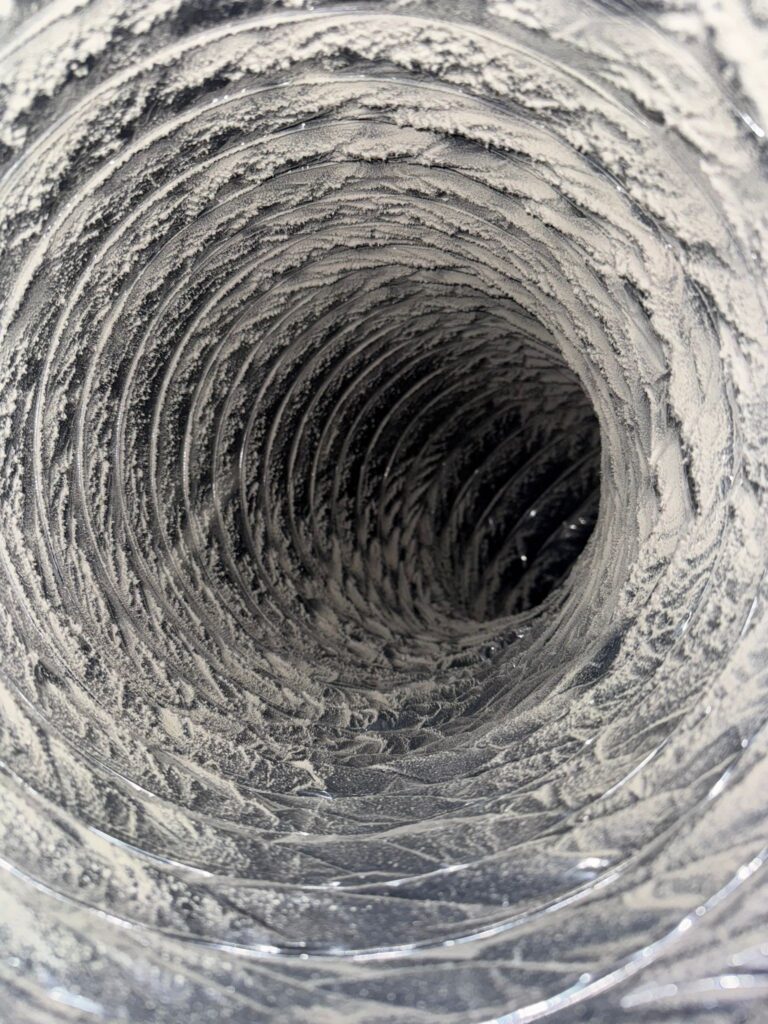
Why Palm City Ductwork Builds Up Faster Than You Think
Palm City is not a worst-case climate the way some inland Florida neighborhoods are, but it has a specific combination that keeps air systems loaded.
- The oak canopy keeps working year-round. Martin County stays green through the winter, which means pollen, leaf litter and fine organic dust keep moving through the air long after northern cities shut down for the season.
- Humidity never fully breaks. Even in the dry stretch of winter, Treasure Coast humidity stays high enough that the AC keeps running. A system that runs nearly twelve months a year moves nearly twelve months of dust across the same surfaces.
- The cooling coil stays wet. An AC removes moisture from the air it cools, and that moisture collects on the coil, in the drain pan and on nearby duct surfaces. Dust plus damp equals buildup that clings instead of drifting.
- Waterfront and canal-adjacent homes see more of it. Properties near the St. Lucie River and the canals pull in more airborne moisture and organic debris than inland lots a mile away.
- Housing age and original ductwork. A large share of Palm City homes still run the flex duct that was installed when the house was built. Worn liner, sagging runs and poorly sealed joints all trap dust that a smooth, sealed system would have carried past.
- Renovation dust is a one-time hit. Any remodel in the last year - a kitchen, a bathroom, new flooring - sends fine drywall and sawdust through the return side of the system, and that material does not leave on its own.
None of this means every Palm City home needs service right now. It means the conditions for buildup are permanent here, so the question is about your system specifically, not the area in general.
The Signs Your AC Ducts Are Actually Due
A dirty filter is not the same as dirty ductwork, and neither one is the same as a system that needs cleaning. Here is how to tell them apart.
- Dust returns within days of a normal cleaning. If you dust a room and it looks the same in three days, the surface dust is coming from somewhere - usually the supply side.
- A musty or stale smell on startup. The tell is timing. If the smell shows up the moment the air kicks on and fades after a few minutes, that points to the ducts and air handler. If it lingers all day, look at the coil, the drain pan or a moisture problem.
- Visible dust or debris at the registers. Pull a supply grille and look past the grille itself. A thin film is normal. A visible layer of fuzz, lint or speckling just inside the boot is not.
- The return grille is caked. The return side carries the dirtiest air in the house. A heavy gray mat on the return grille or filter frame means material is loading up downstream of it.
- Allergy symptoms that are worse indoors. Sneezing, congestion or irritated eyes that improve when you are at work and come back when you get home are commonly reported and worth investigating.
- You just moved in, or the system has never been serviced. Without a service history, a full inspection is the only honest way to know what you are starting with.
What you should not do is decide based on a photo a company texts you of someone else's dirty duct. Any provider who quotes work without inspecting your system first is guessing.
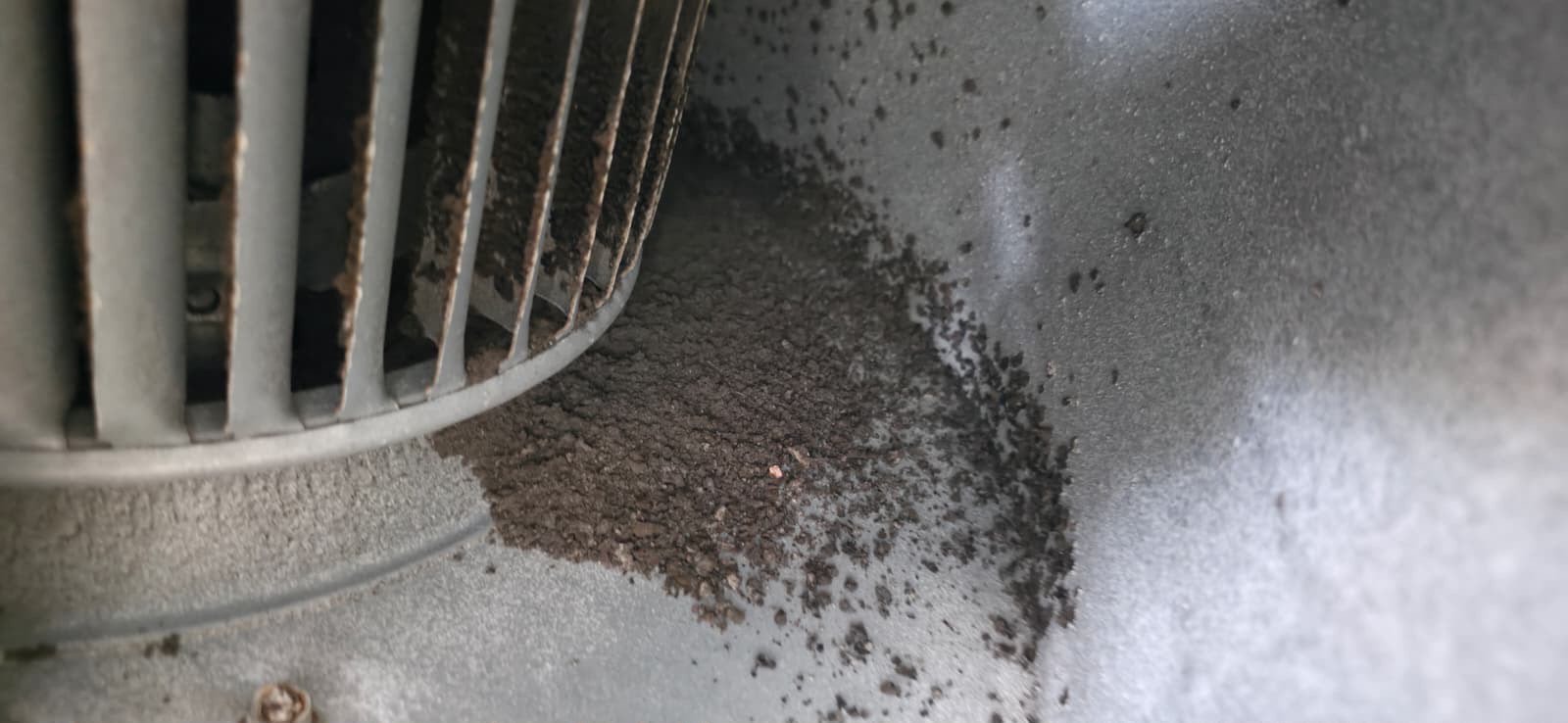
What Professional AC Duct Cleaning Involves
This is where the difference between a real service and a cheap one shows up, so it is worth knowing the sequence.
- Inspection first. A provider should look at your system - the air handler, the coil, the return and supply runs - and show you what they find before quoting anything.
- Source removal under negative pressure. The ducts are brushed and the loosened material is captured through a vacuum rather than blown into your rooms. If the equipment is not pulling negative pressure on the duct run, the dust is going into your house.
- The air handler and blower are part of the job. The blower wheel is the single most common place dust collects, and a cleaning that skips it leaves the biggest source in place. Our post on what air duct cleaning actually involves covers the full sequence.
- The coil gets addressed, not ignored. A dirty or damp evaporator coil is a growth site and an efficiency problem. It should at least be inspected and reported on.
- Sanitizing is a separate step, not a substitute. Treatment helps control what grows back, but it does nothing useful if applied over a layer of dust. Our comparison of cleaning versus sanitizing explains which one your situation calls for.
- Sealing and repairs get quoted honestly. Poorly sealed joints and sagging runs let dust return fast. A provider should tell you plainly when repairs matter more than another cleaning.
- Before-and-after photos of your own system. Not stock photos. Yours - so you can see what was there and verify what was removed.
What It Costs in Palm City
Pricing in Martin County is driven by scope, not by a flat advertised rate. The honest range comes from four things:
- The size of the home and the number of systems. A single-system home with twelve registers is a different job than a two-story house with two air handlers.
- Access. Attic runs, tight chases and second-floor ductwork take longer than exposed, straightforward layouts - and the same ductwork also keeps failing AC part diagnostics worth a look if your system is short-cycling.
- Condition. Light dust is a cleaning. Saturated or damaged flex duct is a replacement, and a provider who will not tell you the difference is padding the quote.
- Add-ons. Coil cleaning, sanitizing and duct sealing are separate line items. Ask what is included before you compare two numbers, because a low quote often means the air handler and coil were never in scope.
Be cautious with flat prices that arrive before anyone has looked at your system. A real quote follows an inspection. Our air duct cleaning cost guide for Port Saint Lucie breaks down how Treasure Coast providers build their numbers, and the same logic applies in Palm City.
How to Compare Providers Without Getting Sold
Three questions separate a straight answer from a pitch.
- "Can I see the before-and-after photos of my own system?" A real crew documents your work. If the answer is vague, keep looking.
- "Is the air handler and blower included in this price?" This is the most common gap between quotes. A number that excludes the blower is not the same service.
- "What are you not covering?" A provider willing to name what they are leaving out - duct sealing, coil cleaning, a run that needs replacing - is being straight with you.
Households near the water and around Palm City neighborhoods should also ask about moisture, since buildup near the river is less about dust alone and more about dust that never fully dries.
Staying Ahead of It After the Cleaning
- Change the filter on schedule, not on memory. A one-inch filter in a system that runs year-round loads fast. Check it monthly in the summer.
- Fix moisture before it becomes growth. A clogged condensate line or a drain pan that will not drain is the start of a bigger bill.
- Seal the obvious leaks. Unsealed joints pull attic and garage air into the system, and that air carries dust.
- Address renovation dust quickly. If you have just finished a remodel, that is the time to look at the system, not a year later.
- Put it on a schedule. In this climate, most Martin County homes land somewhere in the two-to-three-year range, depending on pets, smoking, filters and how much the system runs.
Frequently Asked Questions
1. What is the difference between AC duct cleaning and air duct cleaning?
They are the same service. "AC duct cleaning" and "air duct cleaning" are two names for the process of removing dust, debris and microbial material from the ductwork and air handler that serve your air conditioner. Some providers use one term and some the other, but the work is identical - ducts, blower, coil and registers.
2. How often should AC ducts be cleaned in Palm City?
With the system running nearly year-round and Martin County humidity staying high, most homes land in the two-to-three-year range. That moves shorter if you have pets, a recent renovation, a smoker in the house, or a moisture problem that was never fixed. The condition of your system matters more than a fixed calendar.
3. How much does AC duct cleaning cost in Palm City FL?
The price depends on the size of the home, the number of systems, how accessible the ductwork is, and how much of the system is affected. Flat rates quoted before an inspection are a warning sign. Ask for a written, itemized quote that states plainly whether the air handler, blower and coil are included. Our cost guide for Port Saint Lucie explains how local numbers get built.
4. Will duct cleaning help with allergies in my Palm City home?
It can, when the ducts are genuinely part of the problem. If you notice symptoms that are worse indoors and ease when you leave the house, that pattern is worth investigating. If the source turns out to be a damp coil or a moisture issue upstream, cleaning alone will not hold - the cause has to be fixed too, or the same problem comes back.
5. Do I need sanitizing as well as cleaning?
They do different jobs. Cleaning physically removes debris and growth from surfaces, which is the step that matters most. Sanitizing is a treatment applied afterward to help control regrowth. Applying a treatment over dirty ductwork is not a substitute for cleaning it, and a provider who offers sanitizing as the whole service is skipping the part that works.
6. How long does an AC duct cleaning take?
Most single-system homes take a few hours from setup to cleanup, and that assumes reasonable access. Larger homes, multiple systems, tight attic runs or heavy buildup can run longer. Any provider quoting a fixed window before seeing your system is estimating optimistically.
7. Can duct cleaning damage my ductwork?
Proper cleaning with the right tools does not damage intact duct. The real risk is the opposite - a provider who skips inspection and runs stiff brushes through flex duct that is already degraded. That is why inspection comes first, and why it matters when a provider tells you a run should be replaced rather than cleaned.
Call Sunshine Duct Cleaning at (772) 212-0985 to schedule AC duct cleaning anywhere in Palm City and across Martin County. We are an insured, professional crew, every technician is background-checked and trained, and we inspect before we quote - so you get an honest answer about what your system actually needs. Our hours are Open Sunday-Friday 24 hours, Closed Saturdays. You can see every community we serve on our Martin County service areas page, and you can follow our work on Facebook.