
Land O Lakes has changed faster than almost anywhere else in Pasco County. What was a rural crossroads a couple of decades ago is now a genuine commercial corridor, with offices and clinics along SR-54, retail and restaurants clustered around the US-41 interchange, schools and churches throughout the community, and new professional buildings going up beside established ones. Every one of those buildings runs an HVAC system that works harder than a house ever will.
That workload is the whole story with commercial ductwork. A home runs one air handler and a handful of returns. A Land O Lakes office, clinic or restaurant can run several units, long trunk lines and a maze of ceiling plenums - all moving air for ten, twelve, sometimes twenty hours a day. Buildup collects faster, the problems it causes show up on the balance sheet as well as in the air, and scheduling the work around business hours takes planning. This guide covers what makes commercial ductwork in this corridor different, the signs a building needs service, what a professional cleaning involves for an occupied space, and how to get it scheduled without disruption.
Why Land O Lakes Commercial Ductwork Is Different
Commercial systems are not just larger versions of a home system. They behave differently, and the reasons matter for how the work gets done.
- Longer runtimes. A restaurant may run its system from open to close and beyond. An office runs it through the workday. A clinic runs it continuously. Every extra hour is another hour of dust drawn across the same surfaces.
- Multiple units and complicated layouts. Buildings here often have two or more rooftop or pad-mounted units serving different zones. That means more filters, more coils, more dampers and more places for buildup to hide.
- Ceiling plenums instead of ductwork alone. Many commercial buildings use the space between the ceiling and the roof deck as a return plenum. That large open volume collects dust and debris that a residential return duct never would.
- Mixed occupancy means mixed debris. An office produces paper dust and lint. A restaurant produces grease-laden cooking vapor. A clinic or daycare has different air quality expectations entirely. The debris profile changes the cleaning approach.
- New construction and tenant build-outs. The commercial growth in Land O Lakes means a lot of recent construction and fit-outs. Construction dust - drywall, sawdust, insulation fibers - settles into ductwork and gets distributed through a building long after the trades have left.
- Long cooling season, high humidity. Pasco County runs its air conditioning most of the year, and humidity is what turns loose dust into caked debris on a duct interior.
Put those together and a commercial system here can go from clean to problematic in a fraction of the time a house takes.
The Signs a Building Needs Duct Service
Some of these are things staff notice. Others show up on the utility bill or in customer complaints.
- Visible dust on vents, diffusers and ceiling tiles. Streaking around a diffuser is the most visible sign, and usually means the same buildup exists upstream.
- Hot and cold spots between zones. Restricted airflow from buildup means some rooms get too much air and others too little, and the thermostat cannot fix a delivery problem.
- A musty or stale smell when the system starts. In this climate, that usually points to damp buildup rather than dry dust.
- Rising energy costs for the same occupancy and hours. Coated coils and blower wheels reduce efficiency directly.
- Staff or customer complaints about air quality, headaches or allergies that improve away from the building. Our guide to sick building syndrome covers how that pattern develops.
- Visible debris after construction or a renovation. If a build-out finished recently, that material went somewhere.
If several of those apply, the honest answer is to have the system inspected and assessed rather than guessing at the cause.
What Commercial Cleaning Involves in an Occupied Space
Commercial work is judged on whether the building keeps running. That shapes the entire process.
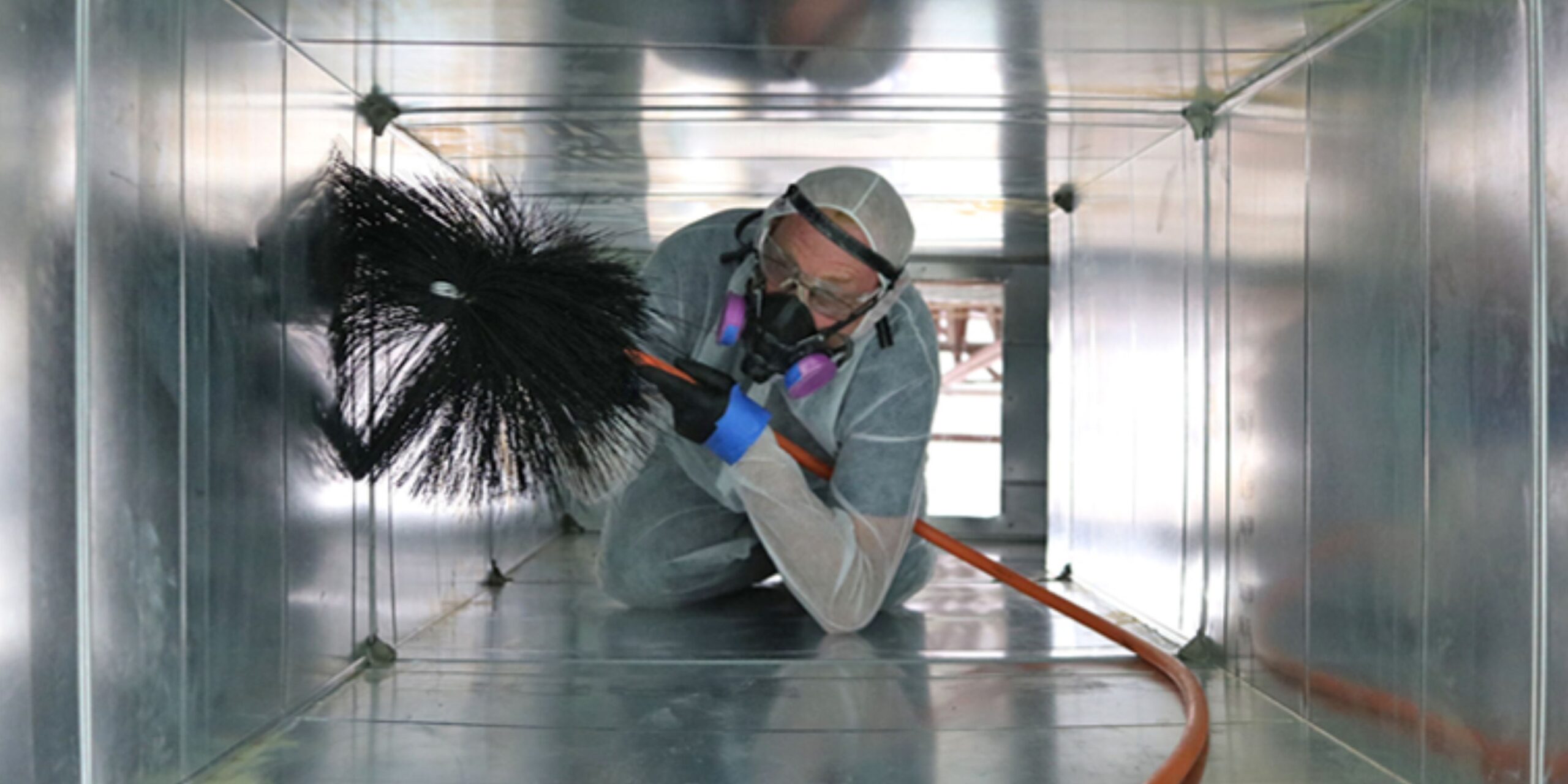
- Source removal under negative pressure. The system is put under vacuum with containment so loosened debris is captured and removed rather than distributed through the building. In an occupied space this is not optional - it is the difference between a cleaning and a mess.
- Work scheduled around your hours. Restaurants are usually serviced before opening or after close. Offices can often be handled in the evening or on a weekend. Clinics and schools need the schedule built around patients and students.
- Every run, not just the visible ones. Supply runs, returns, trunk lines and plenum surfaces are all addressed. Registers and diffusers come off, get cleaned, and go back on.
- Coils, blower wheels and drain pans. This is where efficiency actually lives. A coated coil costs money every month; a dust-packed blower wheel moves less air and runs longer.
- Filters checked and replaced as needed. A cleaning without addressing filtration is a short-term fix.
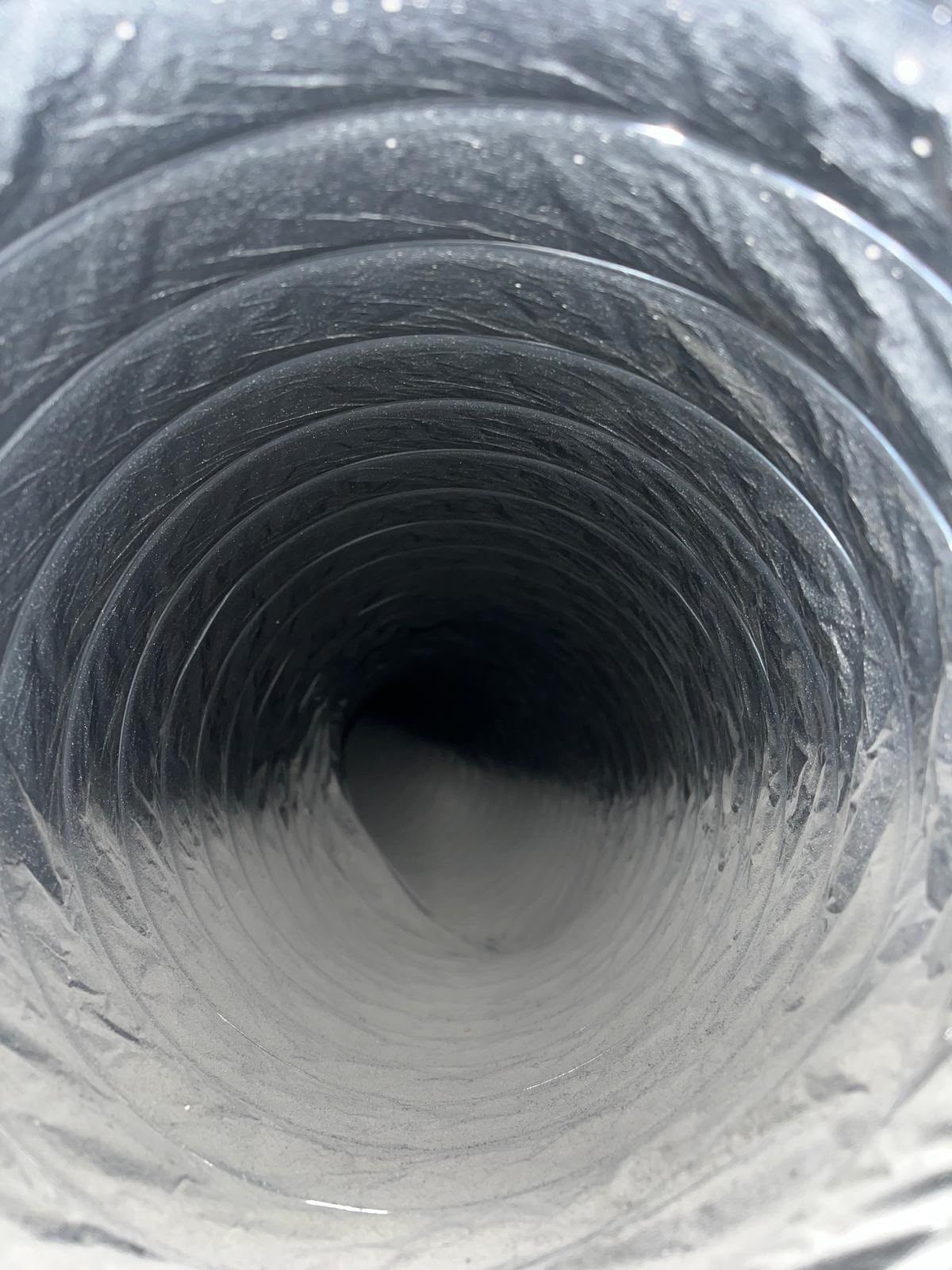
- Before-and-after photos and a clear report. For a business, documented work is worth having on file - particularly for inspections, tenant records or property management.
Why This Matters for a Growing Corridor
There is a practical business case, not just a comfort one.
- Air quality is a customer and staff issue. In a restaurant or a clinic, the air is part of the experience. Customers notice a stale or musty building even when they cannot name what is wrong.
- Efficiency is a recurring cost. Every degree of reduced airflow is paid for monthly in runtime. Commercial systems consume far more energy than residential ones, so the same percentage loss costs far more.
- Equipment life. A system forced to work harder fails sooner. Coil and blower maintenance is cheaper than replacement.
- Documentation protects you. In a leased or managed building, records showing scheduled maintenance are useful when a question comes up.
- It fits around the calendar. Early November is a practical window for many Land O Lakes businesses - before the holiday rush changes staffing and operating hours.
If your building also has a residential component or you are a homeowner in the area, our Zephyrhills dryer vent guide covers the residential side of the same safety concern, and the Pasco County service areas page lists every community we cover.
What Drives the Cost
Commercial pricing is quoted per building, not off a flat rate, because no two systems are the same. What determines the number:
- Number of units and zones. More equipment means more work, but a single scheduled visit is still more efficient than several trips.
- System size and run length. Total duct volume and how far air travels from unit to diffuser.
- Number of vents, diffusers and returns. Each one comes off and goes back on.
- Accessibility. Exposed or walkable plenum space is faster than ductwork sealed behind finished ceilings.
- Level of buildup. A system cleaned on schedule is a much smaller job than one that has never been touched.
- Duct material and condition. Flexible ducting, rigid metal and lined duct all need different handling.
Ask for a written, itemized quote based on an actual walkthrough of your building, confirm what is included - coils, blower wheels, registers, filters - and ask whether you will receive photos and a report. Our guide to how air duct cleaning is priced explains how providers build those figures, and the same logic applies to commercial work at a larger scale.
Why Sunshine Duct Cleaning
We are an insured, professional crew that cleans commercial and residential air ducts, dryer vents and chimneys across Pasco County. Every technician is background-checked and trained, we match equipment to the system rather than running one setup everywhere, and we work around your operating hours so the building keeps running. You can see every community we serve on our Pasco County service areas page, including the Land O Lakes service area, or follow our work on Facebook.
Frequently Asked Questions
1. How often should commercial ducts be cleaned in Land O Lakes?
It depends on the building. A busy restaurant or clinic often needs service annually, while a low-occupancy office may be fine on a longer cycle. Buildings with recent construction or a heavy occupancy load should be assessed sooner rather than waiting for a scheduled interval.
2. Can you work outside our business hours?
Yes, and for most commercial clients that is the right approach. Restaurants are typically serviced before opening or after close, offices in the evening or on a weekend, and clinics and schools around their operating schedules.
3. How long does a commercial cleaning take?
A small office may take a few hours, while a large restaurant or multi-unit building can take a full day or more. We give you a realistic time estimate after a walkthrough so you can plan staffing and access.
4. Do you handle restaurants with grease buildup?
Yes. Restaurant systems collect grease-laden cooking vapor, which behaves very differently from ordinary office dust and needs a different cleaning approach. It is also the reason restaurant ductwork should not be on a long interval.
5. What about construction dust after a build-out?
It is one of the most common reasons for a first cleaning in a new building. Drywall dust, sawdust and insulation fibers settle into ductwork during construction and get distributed through the space long after the trades have left, so a post-construction cleaning is worth scheduling deliberately.
6. Do you provide documentation?
Yes. We provide before-and-after photos and a report of what was found and addressed, which is useful for your records, for property management, or for any inspection that asks when the system was last serviced.
Call Sunshine Duct Cleaning at (813) 359-9338 to schedule commercial duct cleaning anywhere in Land O Lakes and across Pasco County. Our hours are Open Sunday-Friday 24 hours, Closed Saturdays, and we are glad to assess your building before you commit to anything.