Here's a question we hear all the time from Tampa Bay homeowners: "We barely use our fireplace - do we really need chimney cleaning?" It's a fair question, and the honest answer surprises people. A chimney that's used less isn't a chimney that needs less attention. In fact, Florida's climate gives chimneys a unique set of problems, and because nobody expects them, they tend to go unchecked for years.
What Builds Up in a Chimney Nobody Uses Much
An unused chimney isn't an empty chimney. It's an open vertical shaft from your living space to the sky, and in Florida it collects things year-round:
- Creosote. Even occasional fires in a gas or wood fireplace leave creosote - a tar-like residue that's highly flammable - on the flue walls. It doesn't evaporate or wash away; it just waits for the next fire.
- Moisture and mildew. Tampa Bay's humidity is relentless. A flue with no cap - or an aging one - takes on rain, and a damp flue grows mildew and deteriorates from the inside out. Mortar, flashing and the brick crown all age faster wet.
- Nesting pests. Uncapped or damaged chimneys in Florida are a favorite address for birds, squirrels and wasps. A nest isn't just a blockage; nesting material is dry, fluffy and flammable, and it can drop debris into the fireplace below.
- Leaves, sand and storm debris. Afternoon thunderstorms wash grit, leaves and roofing material into an open flue. After a tropical system, we've pulled amazing things out of chimneys - palm fronds, shingle fragments, entire bird nests.
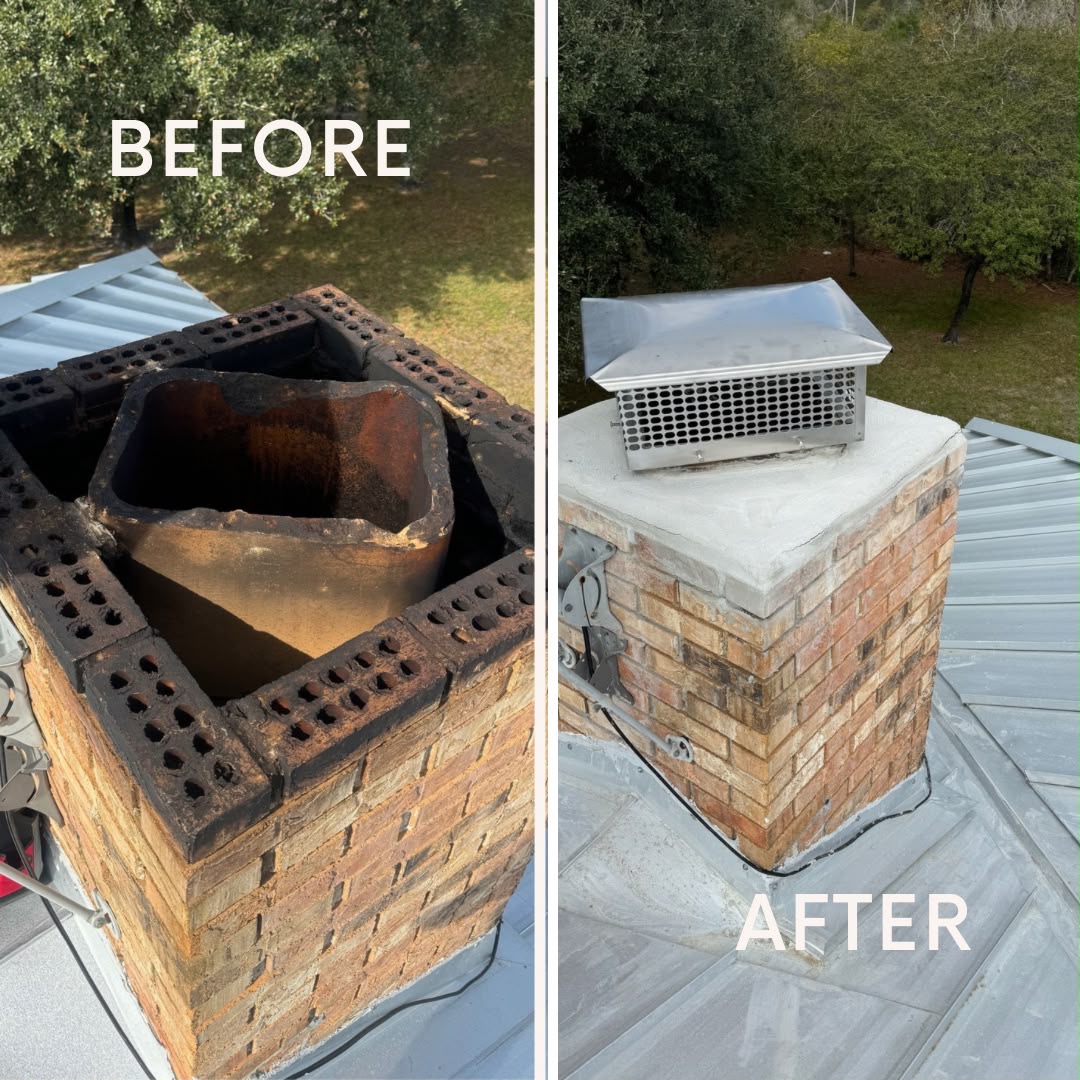
The photo above shows a real before-and-after from a Tampa Bay customer: what a neglected flue looks like from the top, and what it should look like after a proper visit.
Warning Signs It's Time for a Chimney Cleaning
Chimney problems are quiet at first. Watch for:
- A smoky or campfire smell in the room, even when the fireplace hasn't been used
- Smoke backing into the house when you do light a fire
- Animals or birds chirping or scratching above the fireplace
- White staining (efflorescence) on the outside brick - moisture moving through the chimney
- Pieces of dark, flaky material - creosote flakes or soot - falling into the firebox
- A fire that burns poorly or a damper that's hard to open
Any one of these is a good reason to have the chimney looked at before the next cold snap - and in Florida, those deficiencies only get worse in our humidity while you're waiting.
What a Professional Chimney Cleaning Involves
Chimney cleaning done right is a two-part job: an inspection and the sweep itself.
The inspection. A technician examines the firebox, damper, smoke shelf and - with cameras on taller or harder-to-reach flues - the interior flue walls. Checking for creosote buildup, cracks in the flue liner, water damage and cap condition, and how the air flow is actually working. The inspection tells you whether you need a cleaning, a repair, or just a bump down the road.
The sweep. The work area is sealed off - the fireplace opening taped with tarps or a specialized chimney skirt so soot can't escape into your home. Then rotating wire brushes sized to your flue scrub the interior walls from the top down (or bottom up, by system type): dislodging creosote and soot, which is vacuumed out. The smoke shelf and damper are hand-brushed, the firebox is cleaned, and the exterior - the cap, chase, flashing and crown - is checked for the moisture problems Florida is famous for.
A proper residential chimney cleaning and inspection in the Tampa Bay area typically takes one to two hours. You'll know before we leave whether the cap is keeping rain and animals out and the flue is safe to use.
The Safety Case, Without the Hype
Two hard facts, per national fire statistics, that every homeowner should know:
- Most chimney fires start with creosote buildup - and creosote burns at temperatures hot enough to crack flue tiles and spread to the house structure. A dirty flue isn't a cosmetic issue; it's the single thing that turns a fireplace from a cozy feature into a house fire.
- A blocked or partially blocked chimney pushes carbon monoxide back into the living space. A nest at the flue top, a deteriorated flue liner, or a stuck damper can all do it. This matters year-round: Florida homes with gas logs, water heater venting routed through the same flue, or adjacent furnace flues are at risk even on a warm December evening when you light something "just once."
Florida homes don't avoid these risks because the fireplace gets less use - they hide them, because the problems build slowly during the eleven months you're not looking.
How Often Should a Florida Chimney Be Cleaned?
The industry baseline is simple: an annual inspection, and a cleaning whenever the inspection calls for one. For a Tampa Bay home with light, occasional fireplace use, that usually means:
- An inspection every year - ideally in late fall, before the first cold snap you'll actually use the fireplace
- A cleaning every 1 to 3 years, depending on how much you burn, what you burn, and what the inspection finds
- A cleaning after any animal nesting, storm debris, or water intrusion - Florida-specific events that dump material into an otherwise clean flue
If you've just moved into a home and nobody can tell you the last time the chimney was serviced, treat it as overdue. That's the honest answer.
What Chimney Cleaning Costs in the Tampa Bay Area
A standard residential chimney cleaning with inspection in our market typically runs $150 to $350, depending on flue height, accessibility, how many flues the chimney serves, and how much buildup the inspection finds. Add-ons like a new chimney cap (strongly recommended in Florida - keep the rain and the birds out), minor masonry or flashing repairs, or a camera-assisted flue evaluation are quoted separately, so you're never paying for something you didn't sign off on.
If you're in the Tampa Bay area and can't remember your chimney's last service - or you're smelling smoke, hearing birds, or seeing staining on the brick - Sunshine Duct Cleaning's certified techs will inspect and sweep the flue, check the cap and flashing, and give you a straight answer about what it needs. Call (813) 359-9338 for a free estimate.
A Simple Takeaway
Your chimney doesn't get skipped over because it's in good shape - it gets skipped over because it's out of sight. Florida's humidity, storms and wildlife give Tampa Bay chimneys a longer to-do list than most homeowners expect, and the risks - fire, carbon monoxide, water damage - grow quietly in the background. An annual inspection and a chimney cleaning when it's due is a small, predictable line item that keeps a rare luxury safe to use.
Frequently Asked Questions
1. How often does a chimney need cleaning in Florida?
National guidelines call for an annual inspection and cleaning as needed. For lightly used Florida fireplaces, cleaning every 1 to 3 years is common - with an inspection every year, and a cleaning after any animal nesting, storm debris or water intrusion.
2. What is creosote and why is it dangerous?
Creosote is the tar-like residue that wood smoke deposits on flue walls. It's flammable and builds in layers; thick creosote can ignite in a chimney fire hot enough to damage the flue and spread to the house.
3. Why does an unused chimney still need servicing?
Because an open flue collects rain, humidity damage, leaves and animals whether you build fires or not. Moisture and nesting blockages are hazards on their own - unrelated to how many fires you light.
4. Can I clean my own chimney?
Reaching firebox dust with a brush is easy; reaching and evaluating the flue walls, cap, flashing and liner - the parts where danger actually forms - takes professional brushes, cameras and training. Most DIY kits can't see the problems that matter, which is why an inspection is really the point of the service.