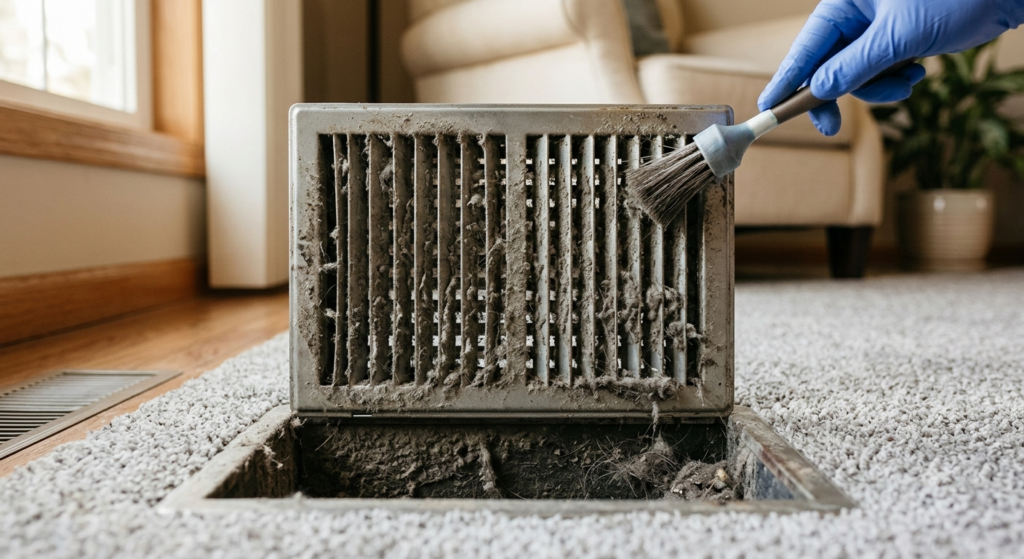
When you adjust the thermostat, you expect a refreshing gust of cool air or a cozy blanket of warmth. But what else is coming out of those grilles?
Out of sight, out of mind—your ductwork is the central respiratory system of your home. Over time, it collects a hidden accumulation of dust, soot, pet dander, mold spores, and airborne debris. Every time your system turns on, it circulates those particles right back into your living space.
While duct cleaning isn’t something you need every month, leaving dirty vents ignored for years can affect indoor air quality, worsen allergies, and force your HVAC unit to work harder than necessary.
Here are 5 hidden signs that your home’s ductwork is overdue for a deep clean.
1. The “Musty Punch” (Unexplained Odors When the System Kicks On)
If you notice a stale, earthy, or damp smell every time your air conditioning or heating unit kicks in, it’s rarely just “old air.”
- The Cause: High humidity levels can trap moisture inside dark duct networks, creating an ideal breeding ground for mold and mildew.
- The Red Flag: If the odor lingers long after the system starts running, spores may have settled directly on the inner walls of your ductwork or on the evaporator coils.
Safety Tip: If you smell a persistent burning odor or sulfur (rotten eggs), skip the duct cleaning for a moment and call an HVAC technician immediately—that points to an electrical issue or a potential gas leak.
2. You Dust, but the Dust Returns Instantly
Do your coffee tables, shelves, and electronics look like they haven’t been wiped down in weeks—even though you just dusted yesterday?
When air ducts are lined with years of accumulated debris, the airflow acts like a blowdryer, continually shooting small bursts of particulate matter back into your rooms.
Quick Test: Take a look at your return vents and supply grilles. If you see visible “dust bunnies” or fuzzy, web-like buildup clinging to the metal slats, the inside of your ducts likely looks much worse.
3. Unexplained Allergy Symptoms Indoors
If you find yourself sneezing, dealing with itchy eyes, or waking up with a stuffy nose only when you spend time inside your home, your indoor air quality (IAQ) could be the culprit.
Ducts can trap and continuously recirculate common allergens:
- Pet dander: Hair and skin flakes carry deep into the system.
- Dust mites: Tiny microscopic pests that thrive in humid, dusty environments.
- Pollen: Brought in from outside via shoes and open windows, eventually settling into vents.
4. Uneven Airflow from Room to Room
Have you noticed that your bedroom feels like an oven while the living room feels freezing cold? While uneven temperature can stem from leaky ducts or poor insulation, it’s often caused by physical blockages.
Over time, heavy layers of dust, debris, or even leftover construction waste (like drywall dust and insulation fragments) can restrict airflow through specific branch lines. When air can’t pass freely, your HVAC blower has to work significantly harder, leading to higher monthly utility bills and premature equipment wear.
5. You Recently Completed a Home Renovation
If you recently remodeled a kitchen, sanded hardwood floors, or put up new drywall, your ducts took the brunt of that project.
Construction dust is extremely fine and easily bypasses standard air filters. It gets pulled straight into the return vents and coats the interior lining of the ductwork. Leaving heavy drywall or wood dust in your vents won’t just ruin your air quality; it can also clog your system’s blower motor and evaporator coil over time.
Quick Assessment: Is It Time to Clean Your Ducts?
| Indicator | Minor Issue (Change Filter) | Serious Issue (Consider Duct Cleaning) |
|---|---|---|
| Filter Lifespan | Gray after 60–90 days | Pitch black or caked in heavy debris in under 30 days |
| Vent Appearance | Light surface dust | Heavy, matted buildup clinging to vent slats |
| Airflow | Consistent across rooms | Noticeably weak in specific zones |
| Health Impact | Occasional seasonal sniffles | Persistent symptoms that improve when you leave home |
What to Do Next
If several of these signs sound familiar, start by checking your HVAC air filter. If replacing the filter doesn’t resolve the dust or odor within a week, consider scheduling a professional inspection.
Look for NADCA-certified (National Air Duct Cleaners Association) technicians who use high-powered negative pressure vacuum systems to ensure dirt is pulled entirely out of your home rather than released back into your living rooms.